Venice in the Interval
Twenty-four photographs taken between a hotel, an institute and a railway station

I came to Venice for one night, to participate in a discussion on European geopolitics at the Berggruen Institute. The city was therefore neither my destination in the customary sense nor the object of a planned photographic expedition. There was no itinerary, no patient search for the ideal hour, no possibility of returning to a place once the light had changed. Venice appeared only in the intervals: between the hotel and the institute, between the institute and the hotel, and finally between the hotel and the railway station.
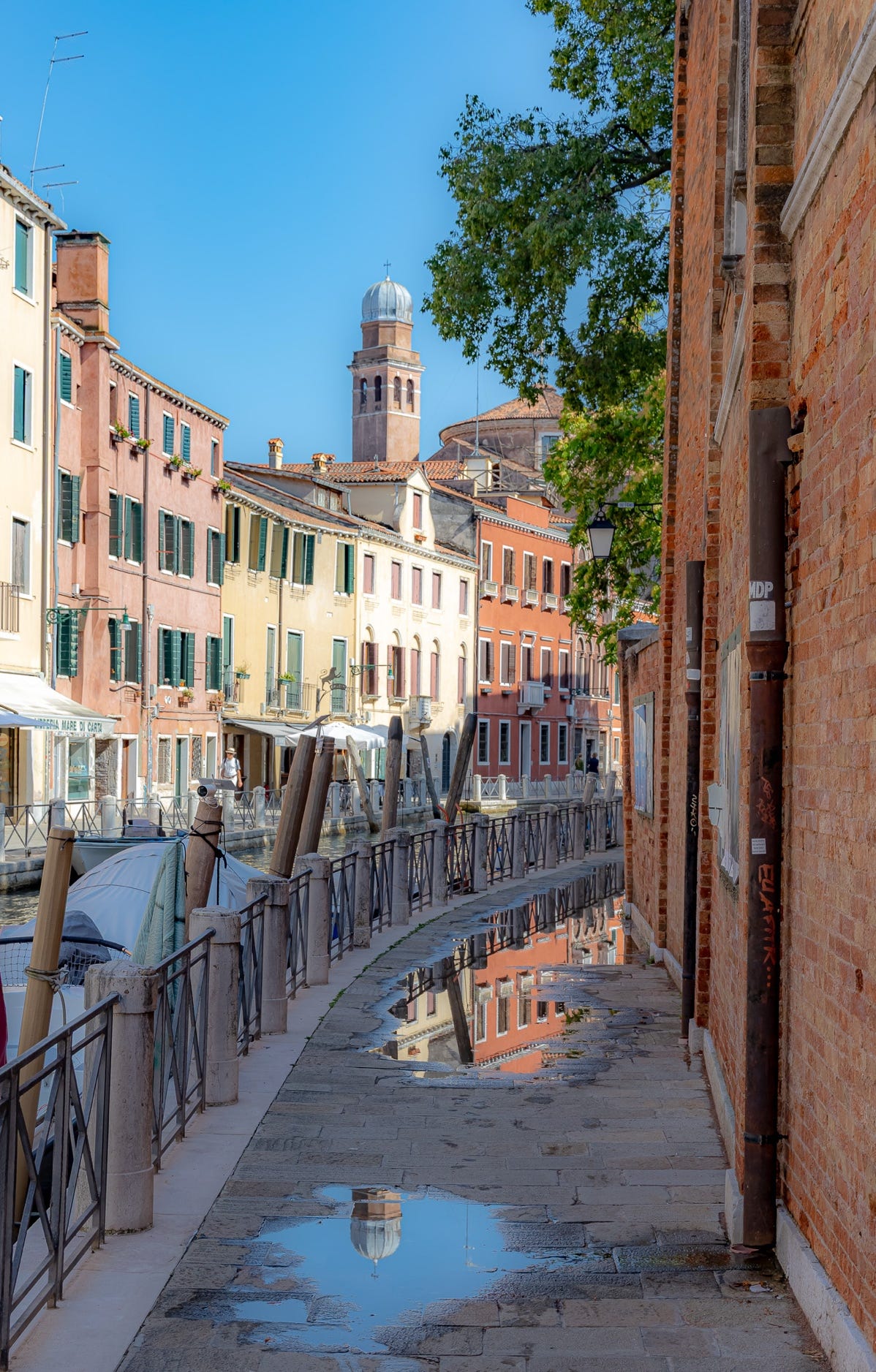
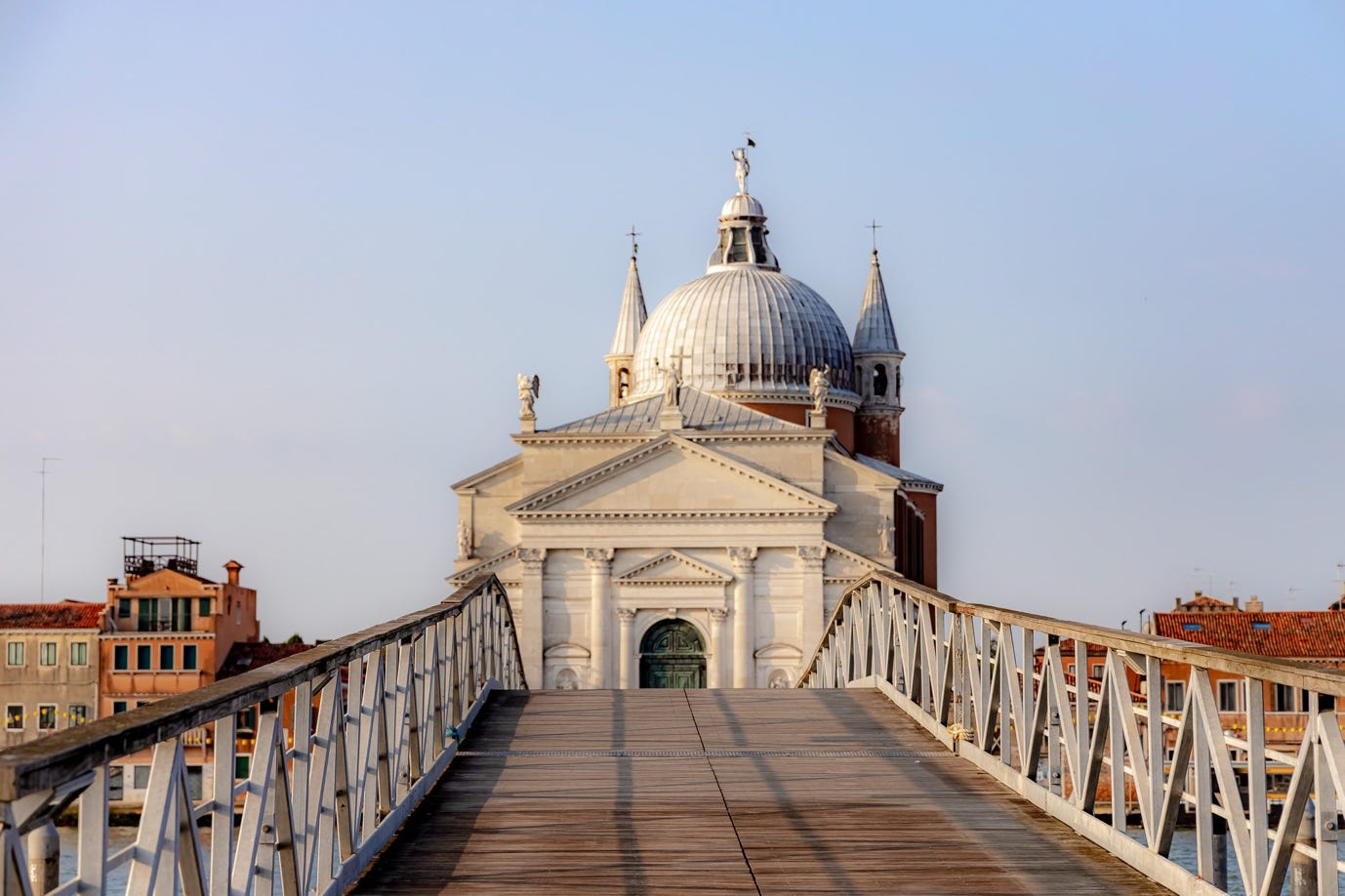
These photographs were made while moving through a city that resists movement. Venice continually delays the traveler. A direct route bends around water; an ordinary street ends at a canal; a bridge raises the eye above the practical level of the journey and briefly turns transit into contemplation. Even when one is in a hurry, the city imposes detours. It makes the shortest passage visually inexhaustible.
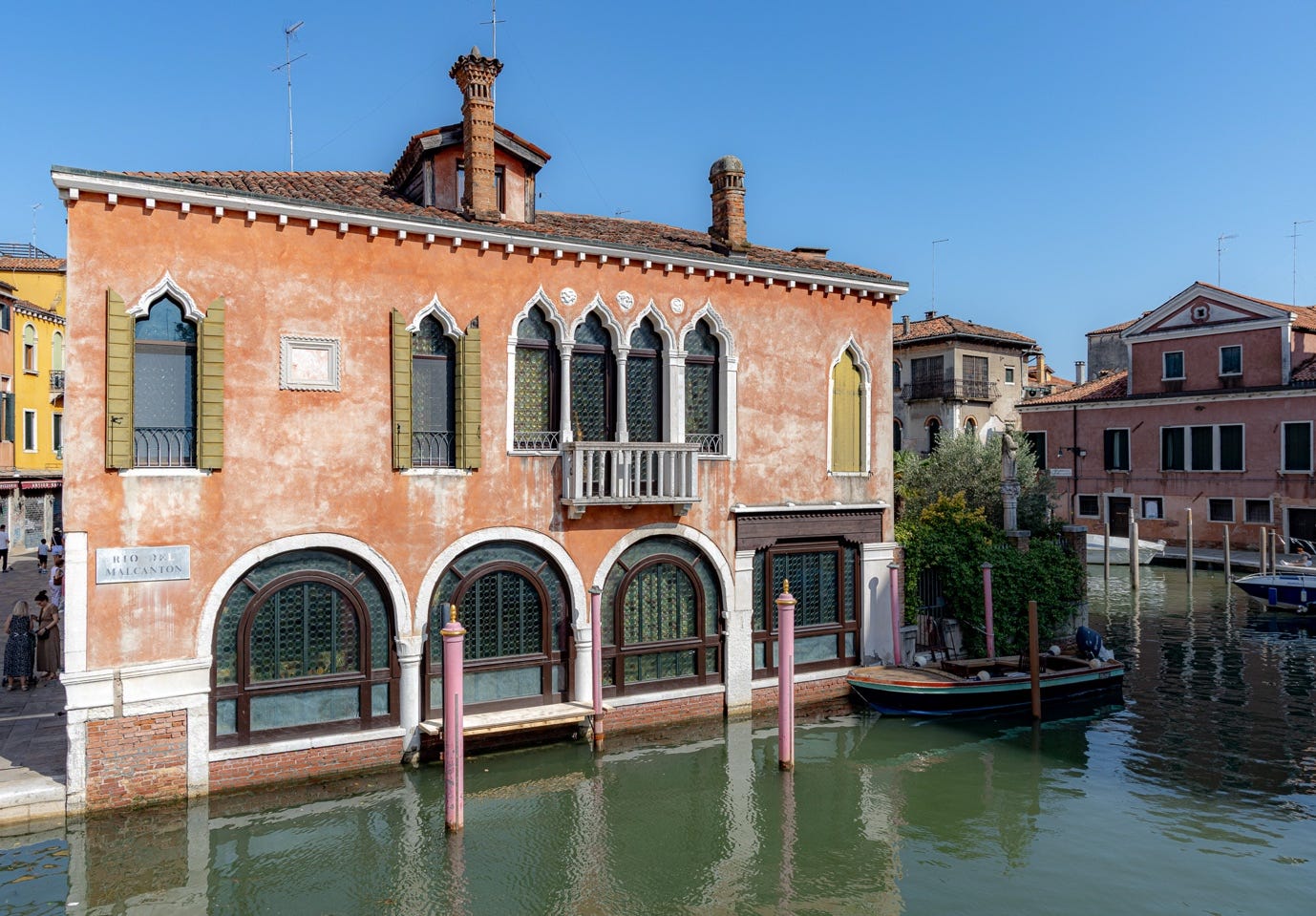
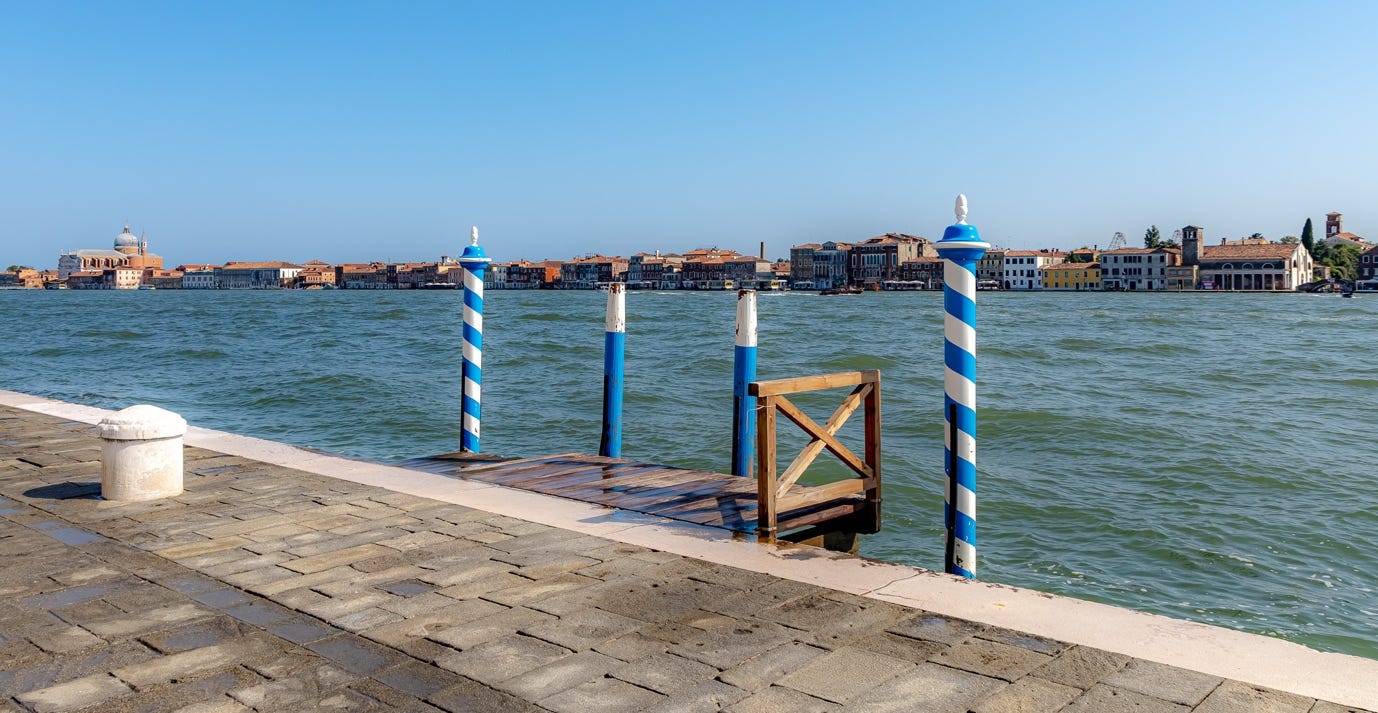
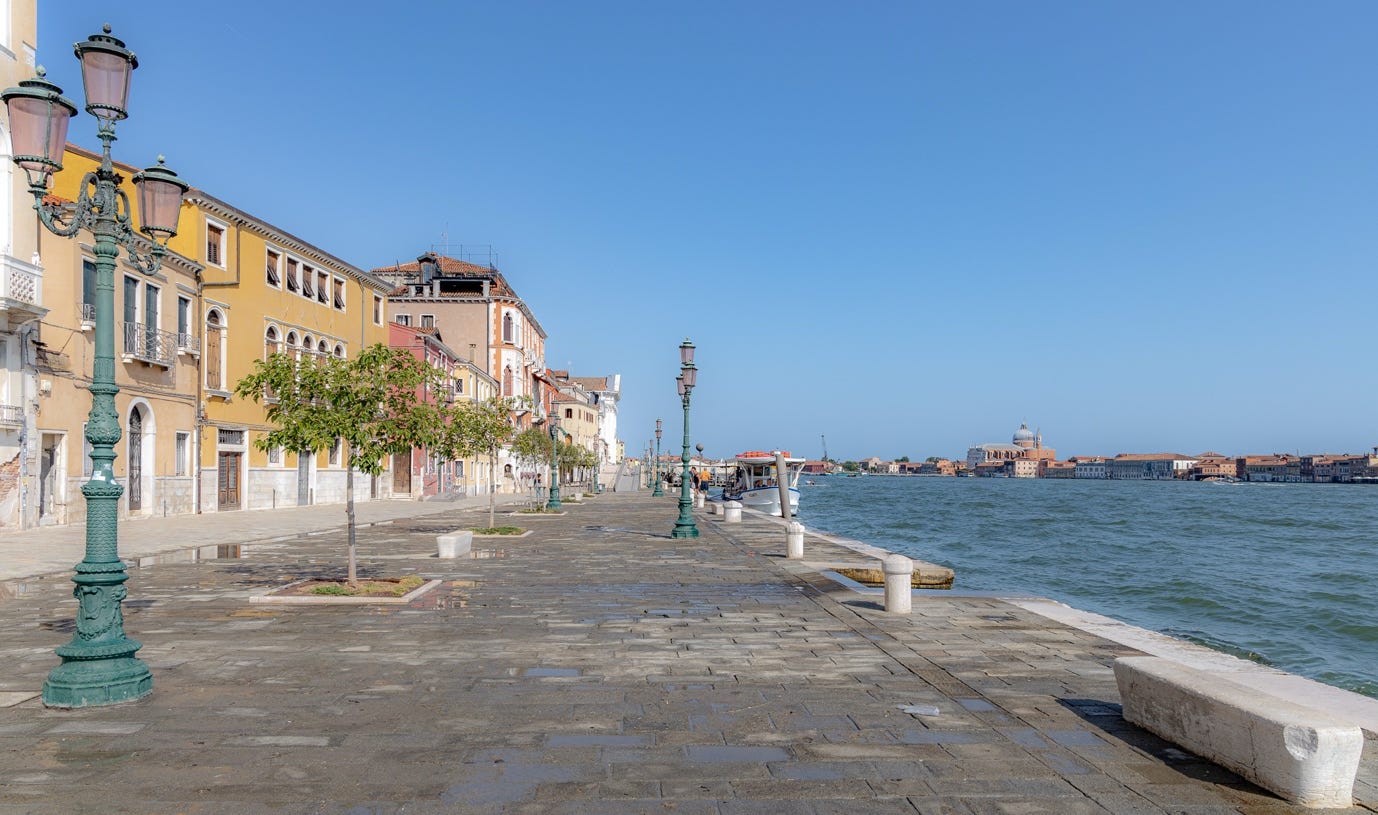
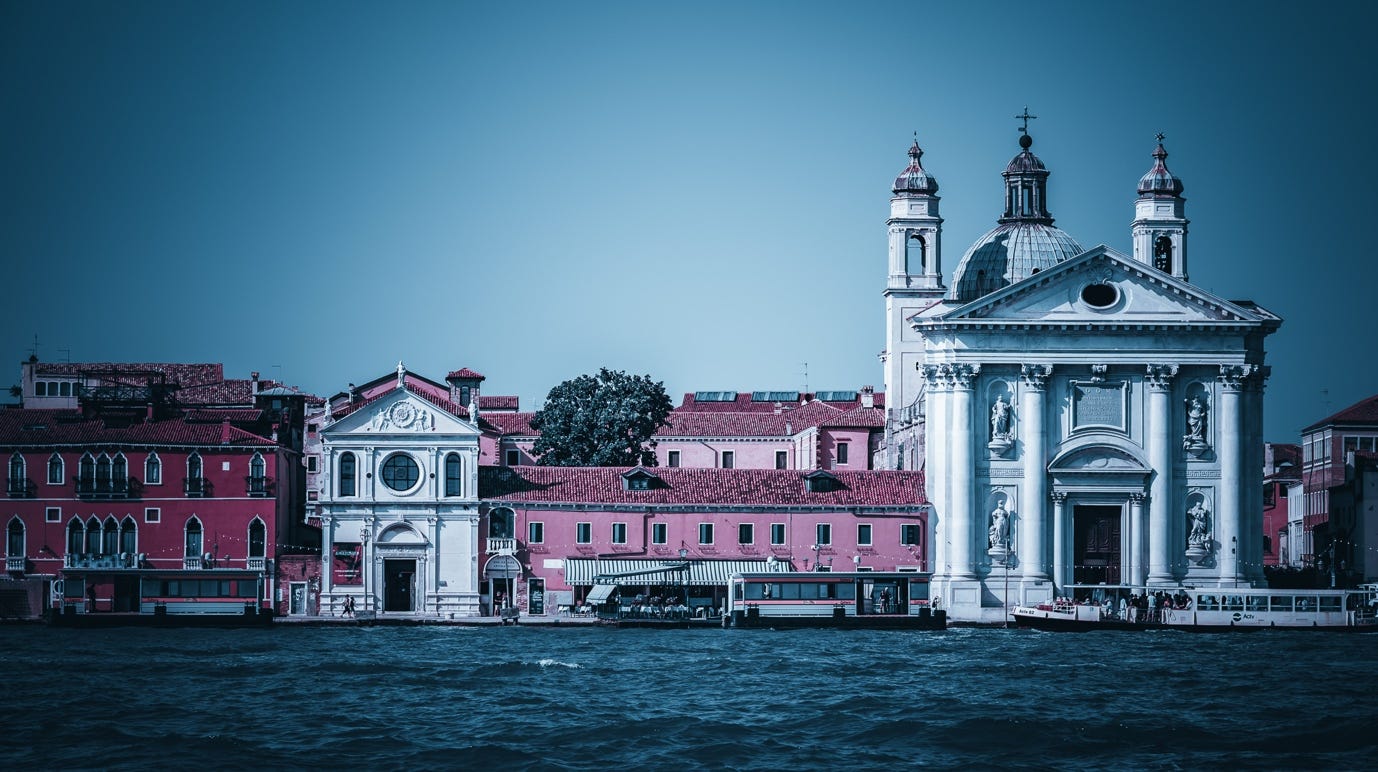
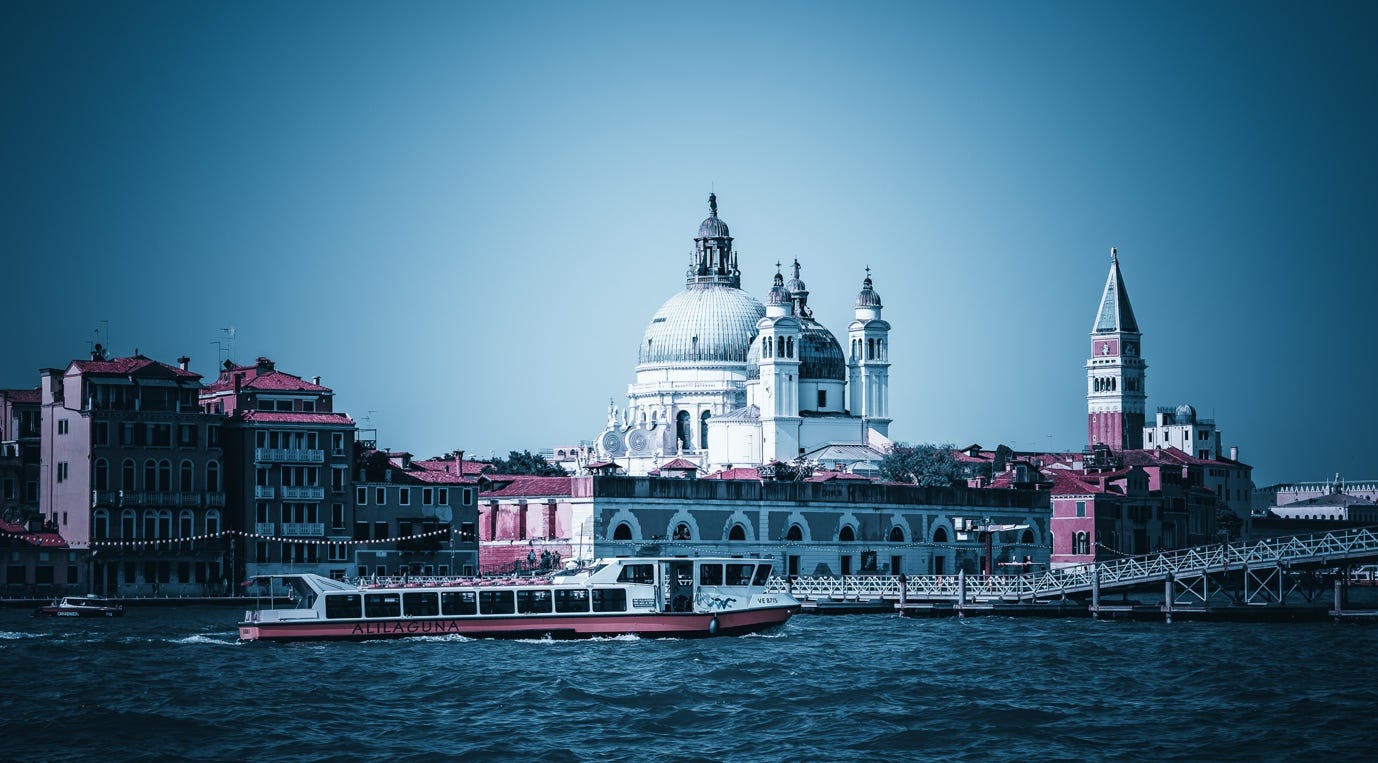
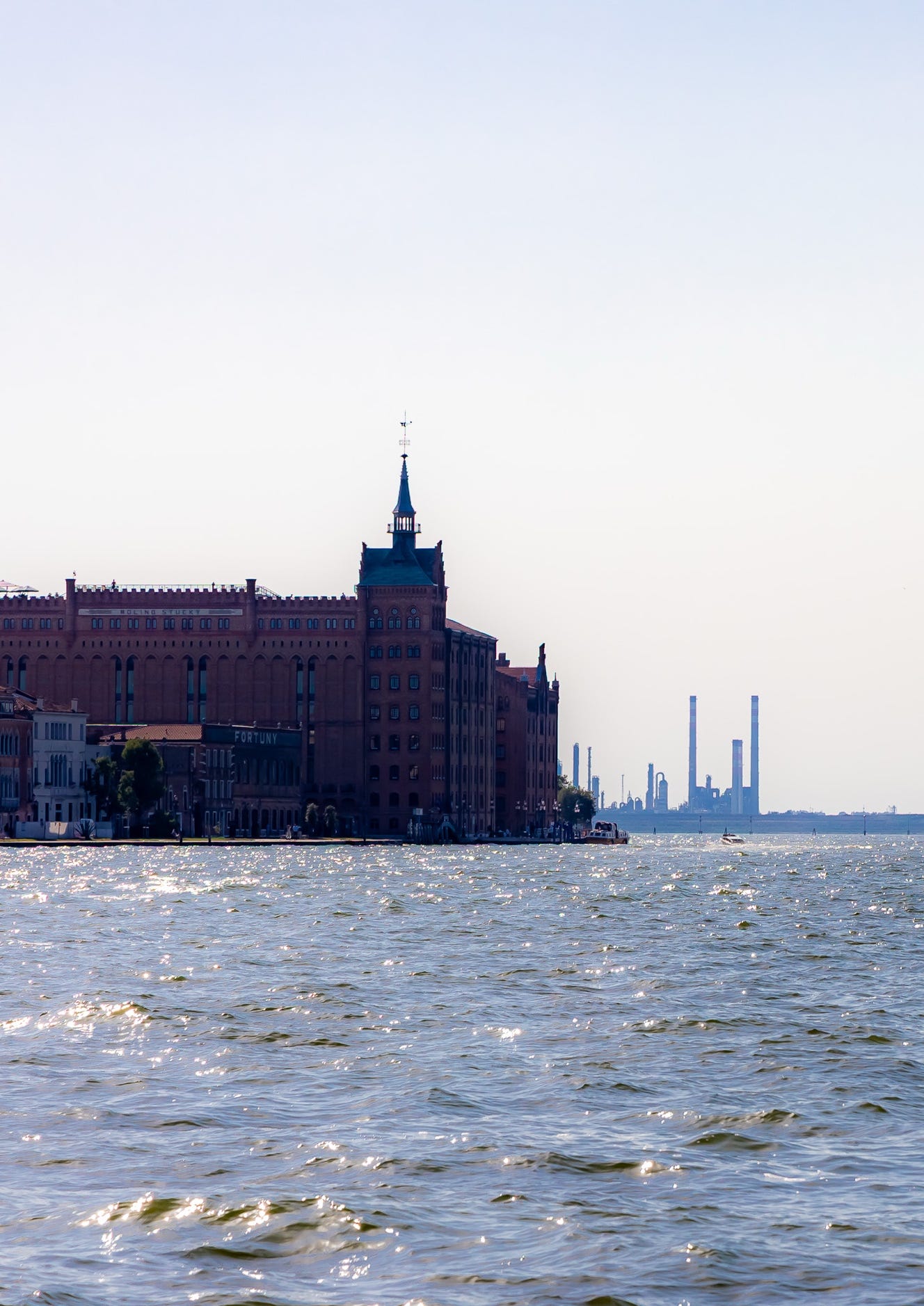
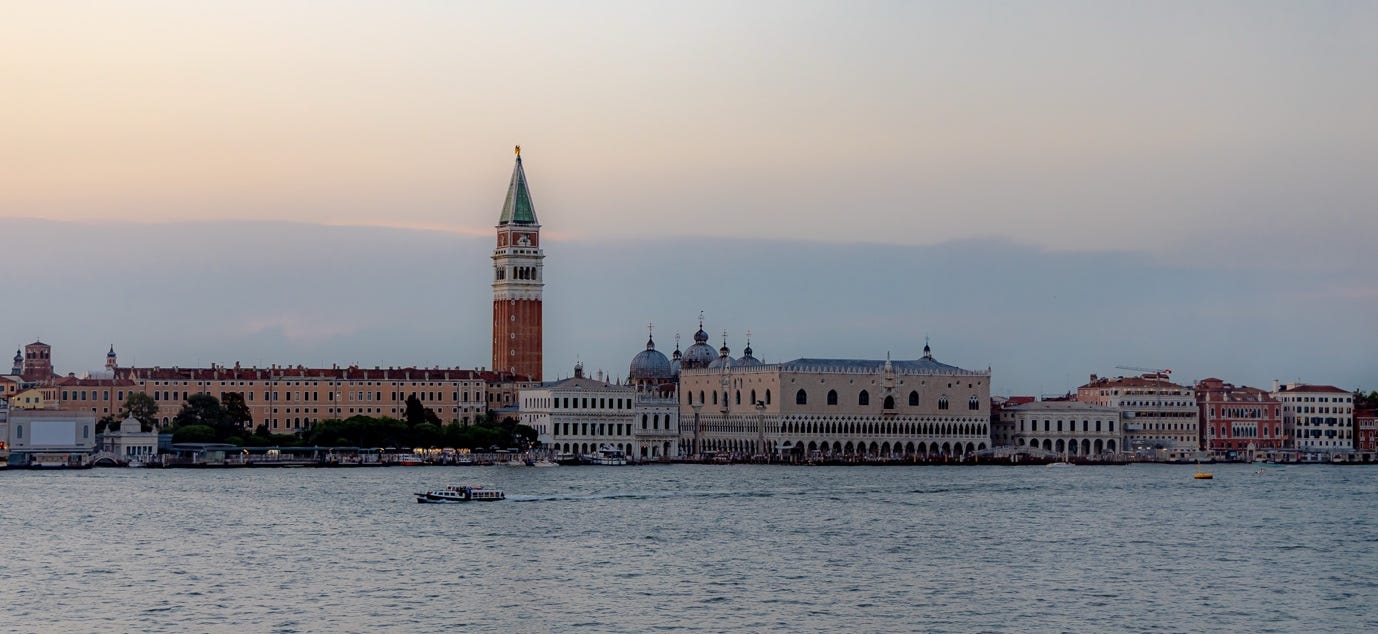
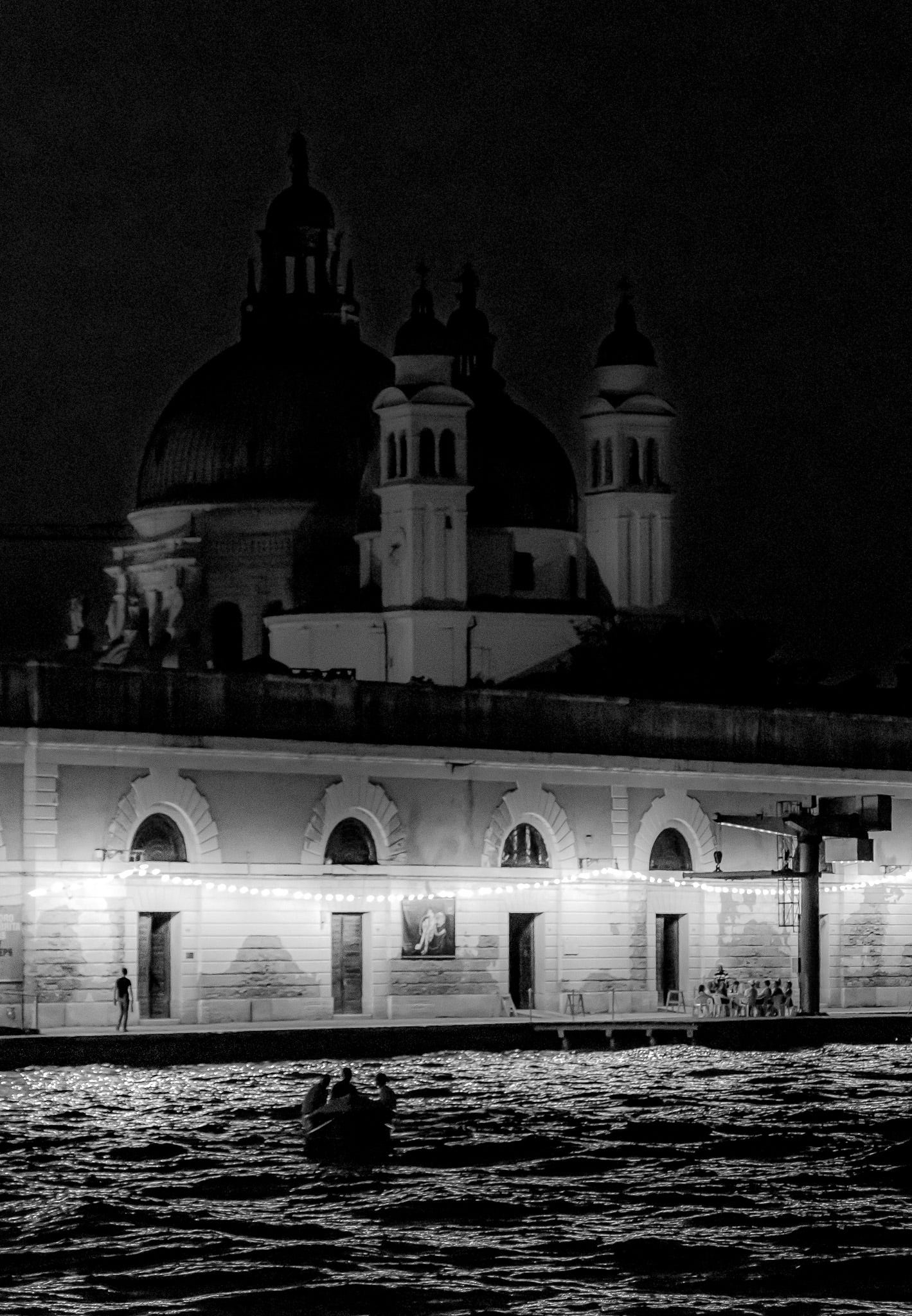
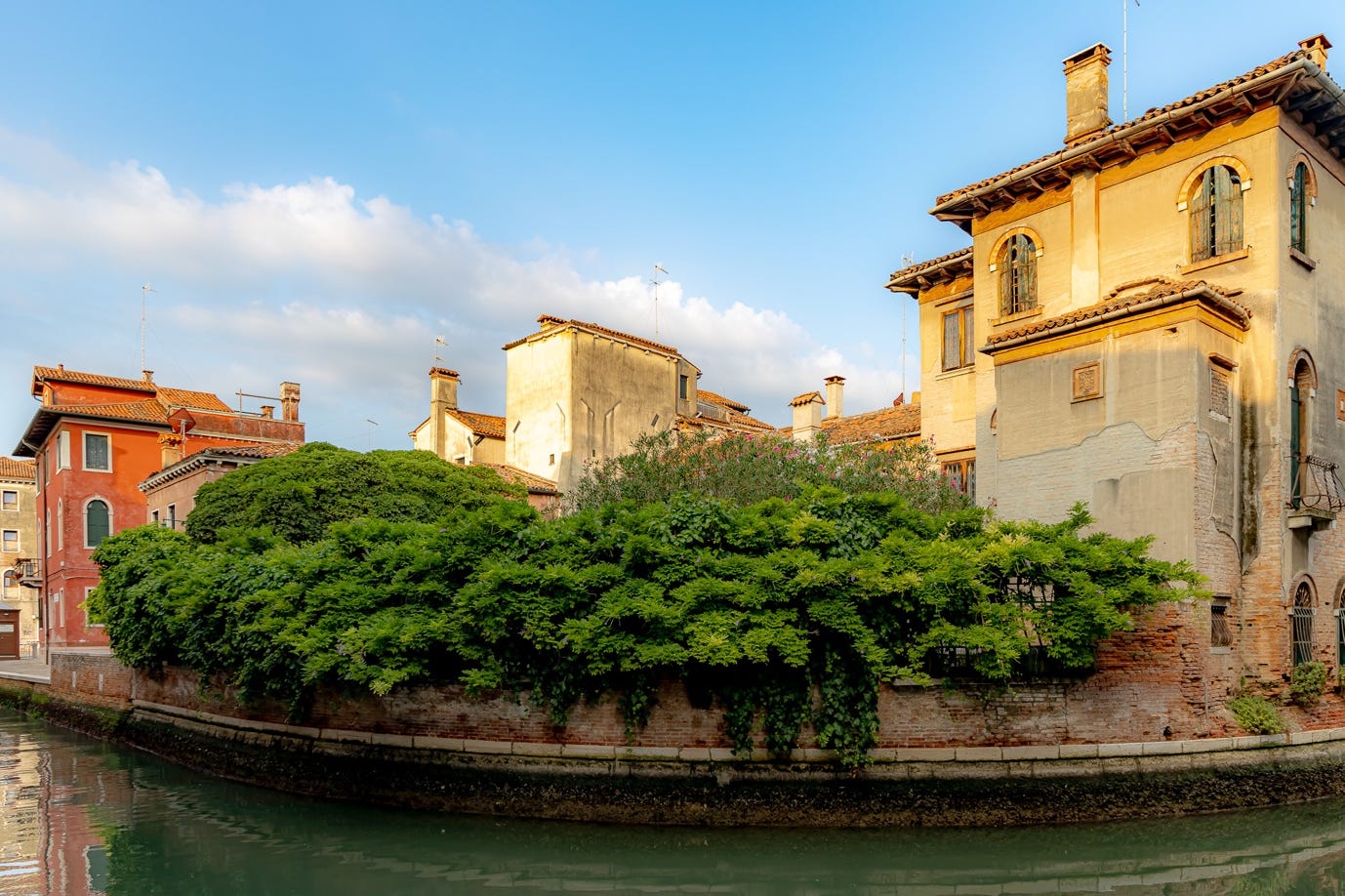
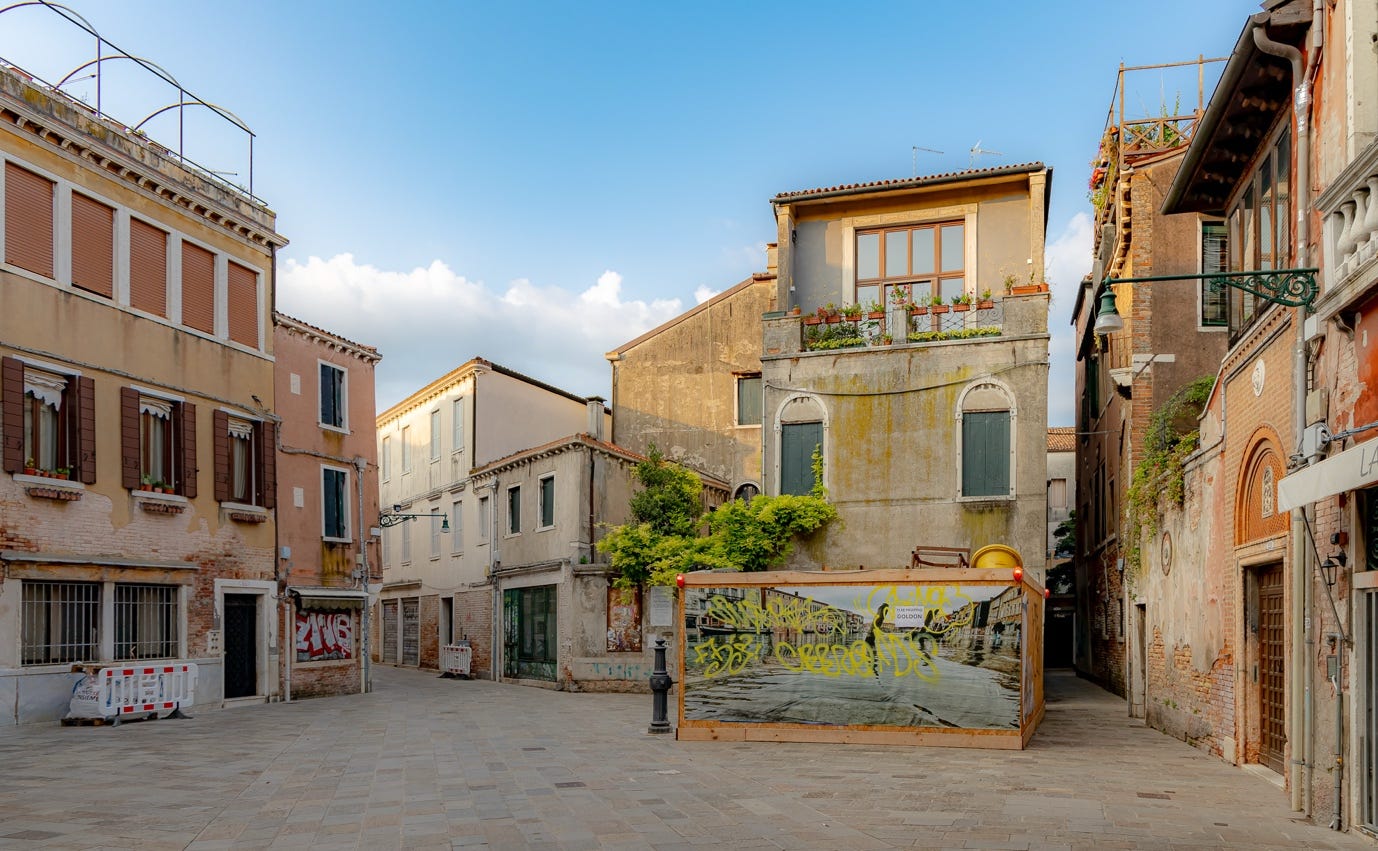
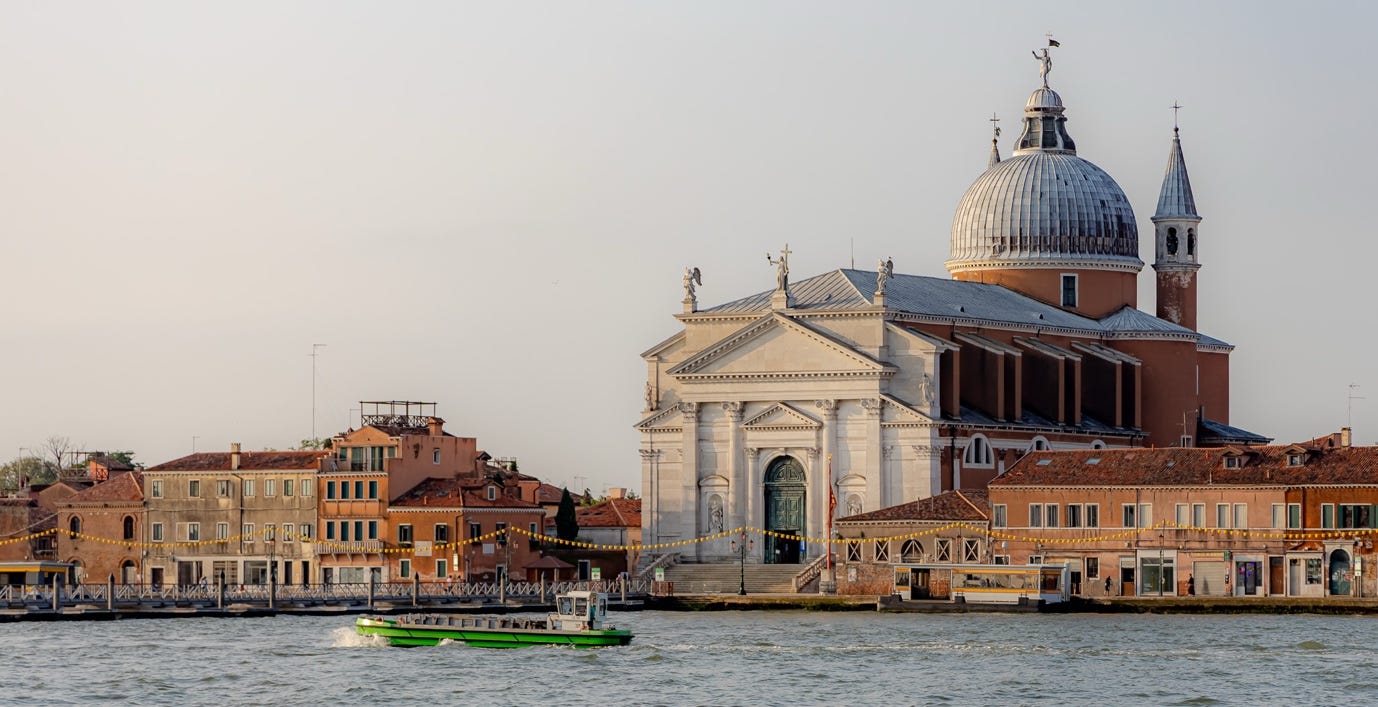
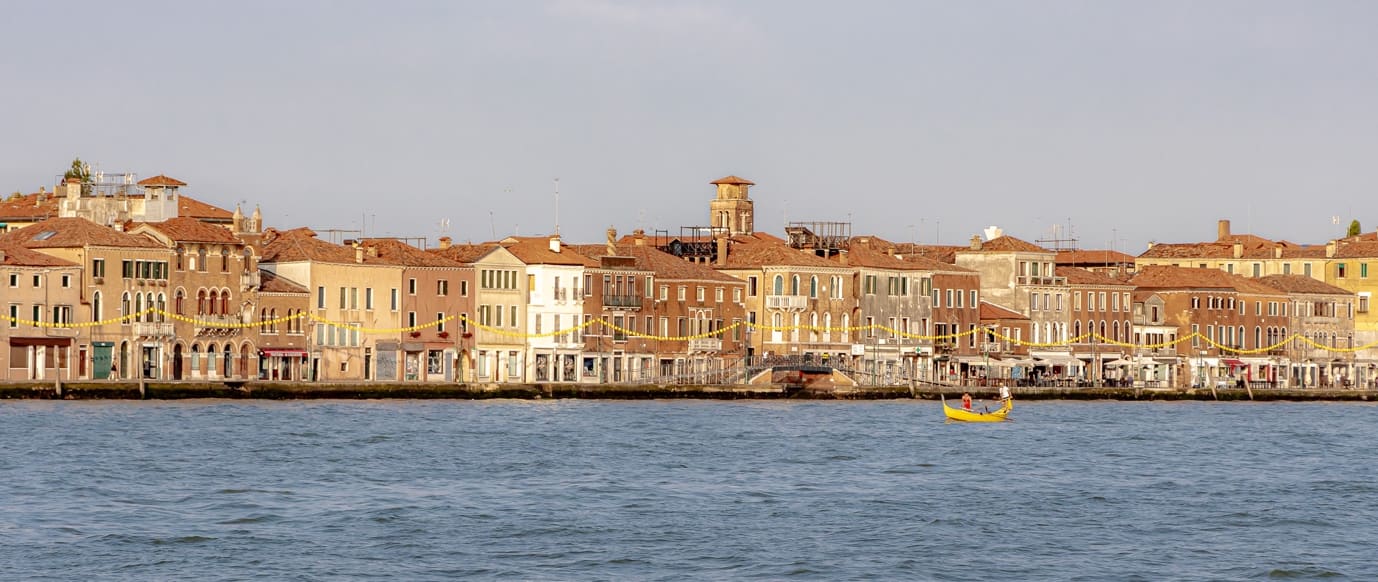
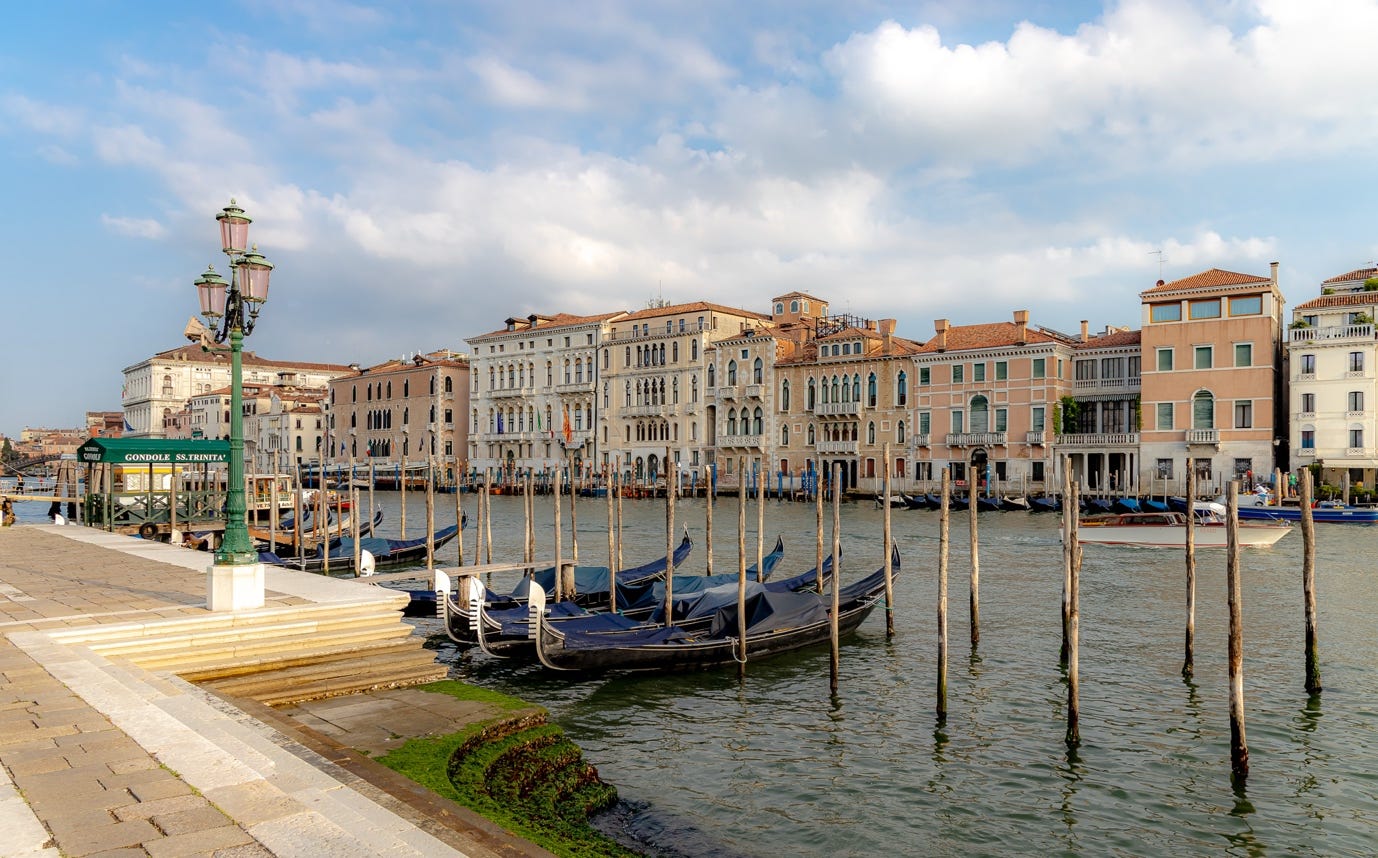
The sequence begins in the clarity of daylight. Walls, windows, quays and bell towers retain their architectural definition. Yet water immediately begins to unsettle their solidity, reproducing the city in fragments and inversions. Beyond the intimate canals, the lagoon opens Venice toward a larger geography: churches, ships, industrial silhouettes and distant shores share the same horizon. Here the historical city is no enclosed museum. It remains exposed to infrastructure, commerce, weather and the political world beyond it.
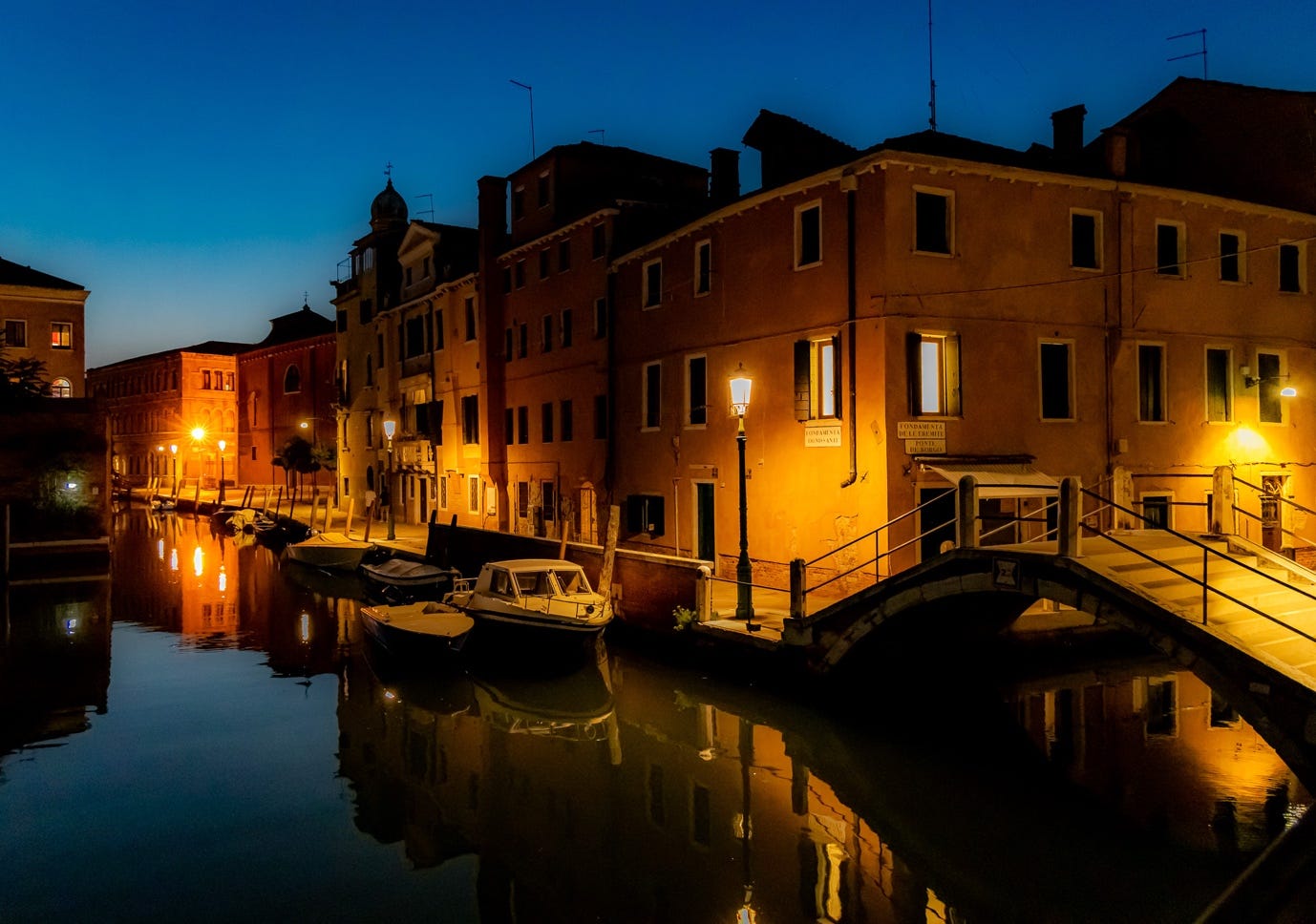
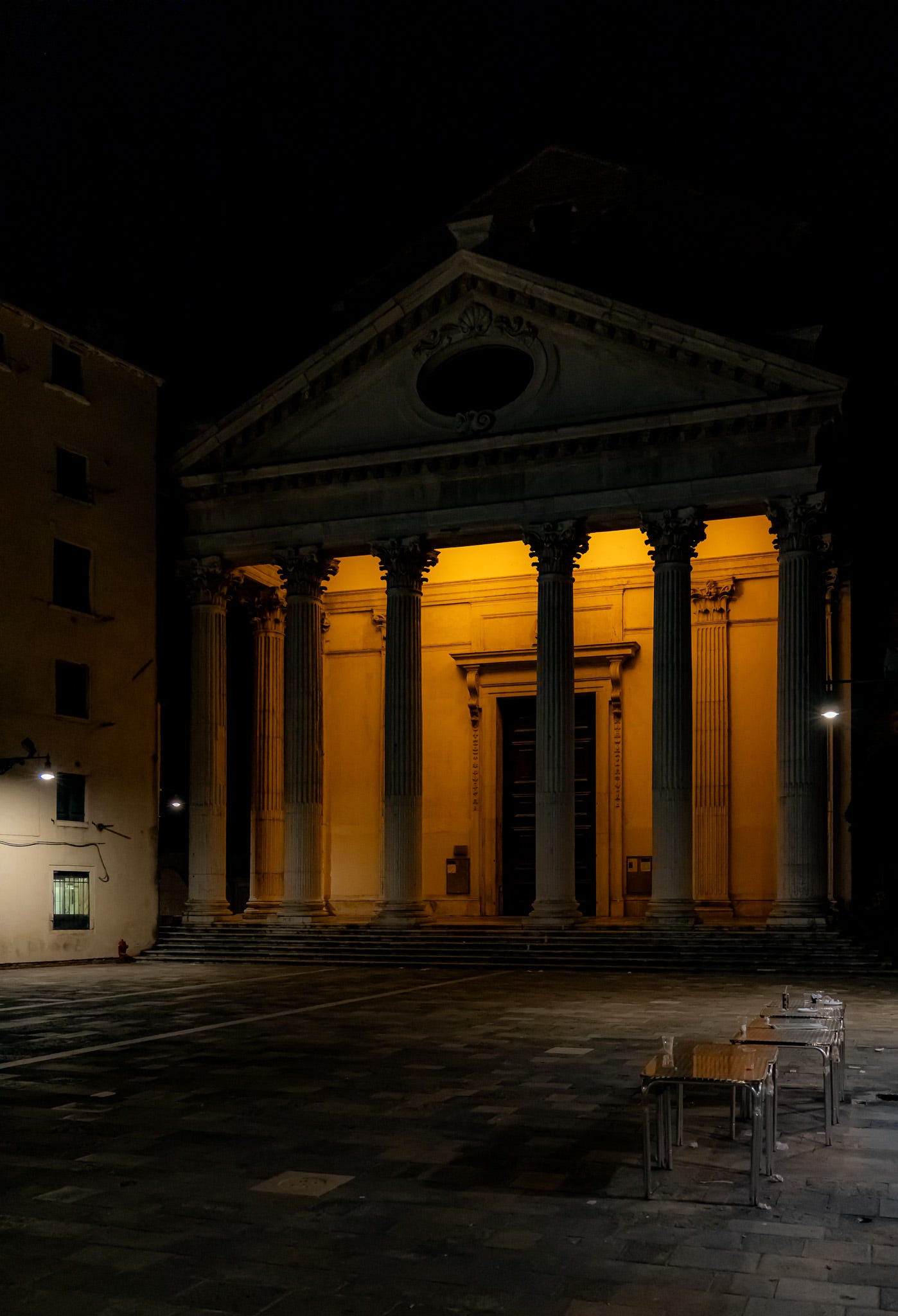
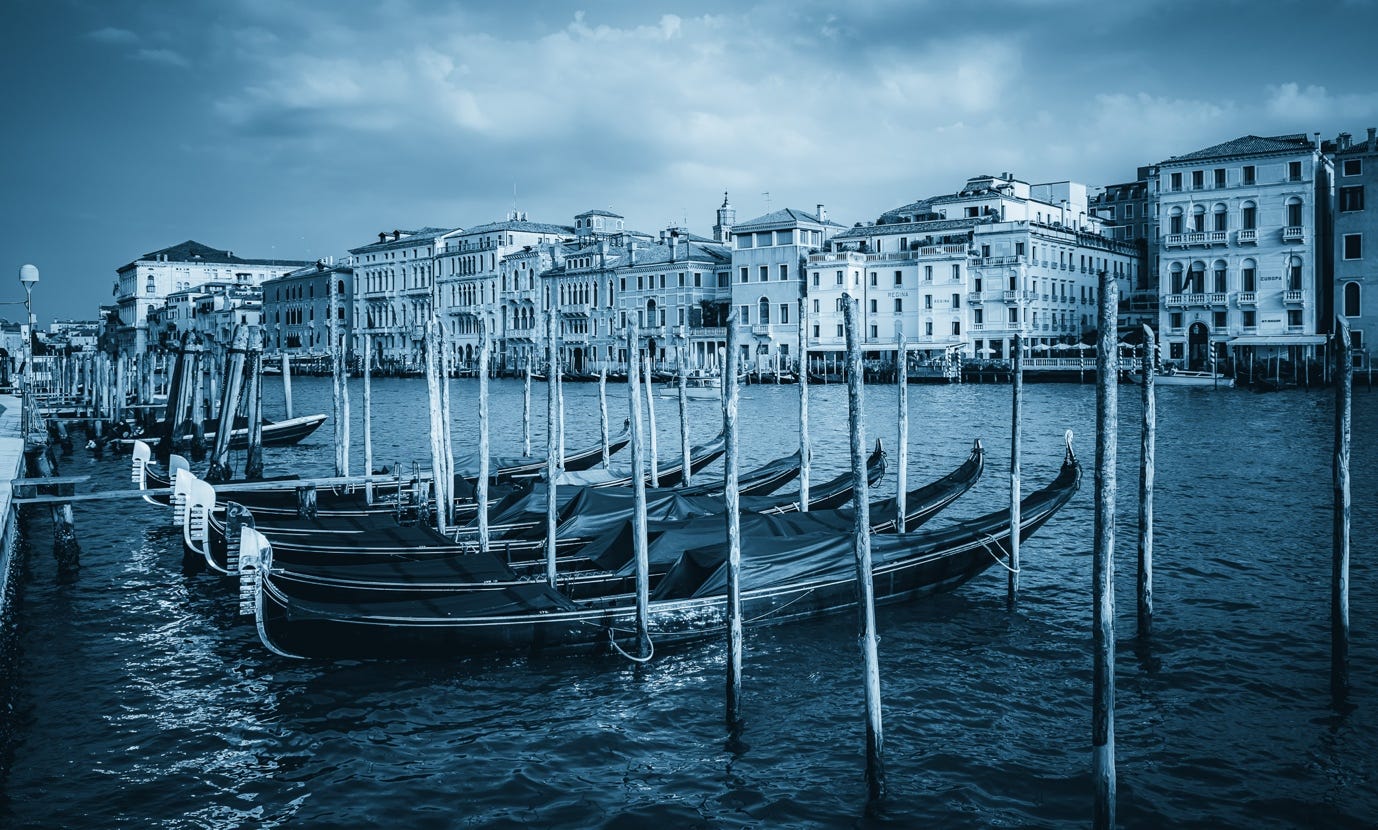
At night, Venice changes register. Architecture ceases to describe space and begins to stage it. Facades emerge from darkness; canals absorb artificial light; churches become luminous thresholds surrounded by emptiness. The city appears less as a collection of monuments than as a system of absences—empty chairs, closed windows, moored boats, deserted squares and passages awaiting their next inhabitant.
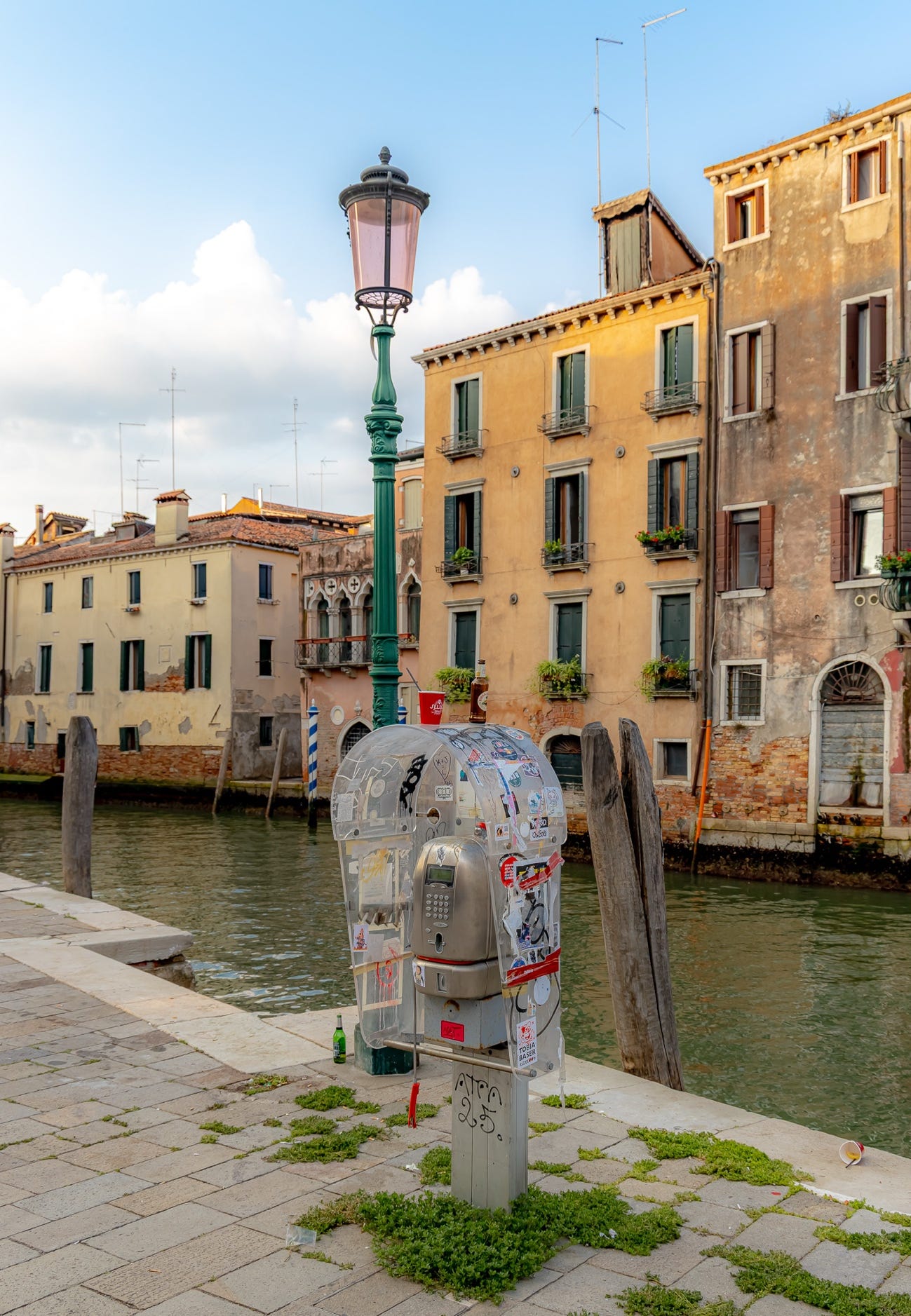
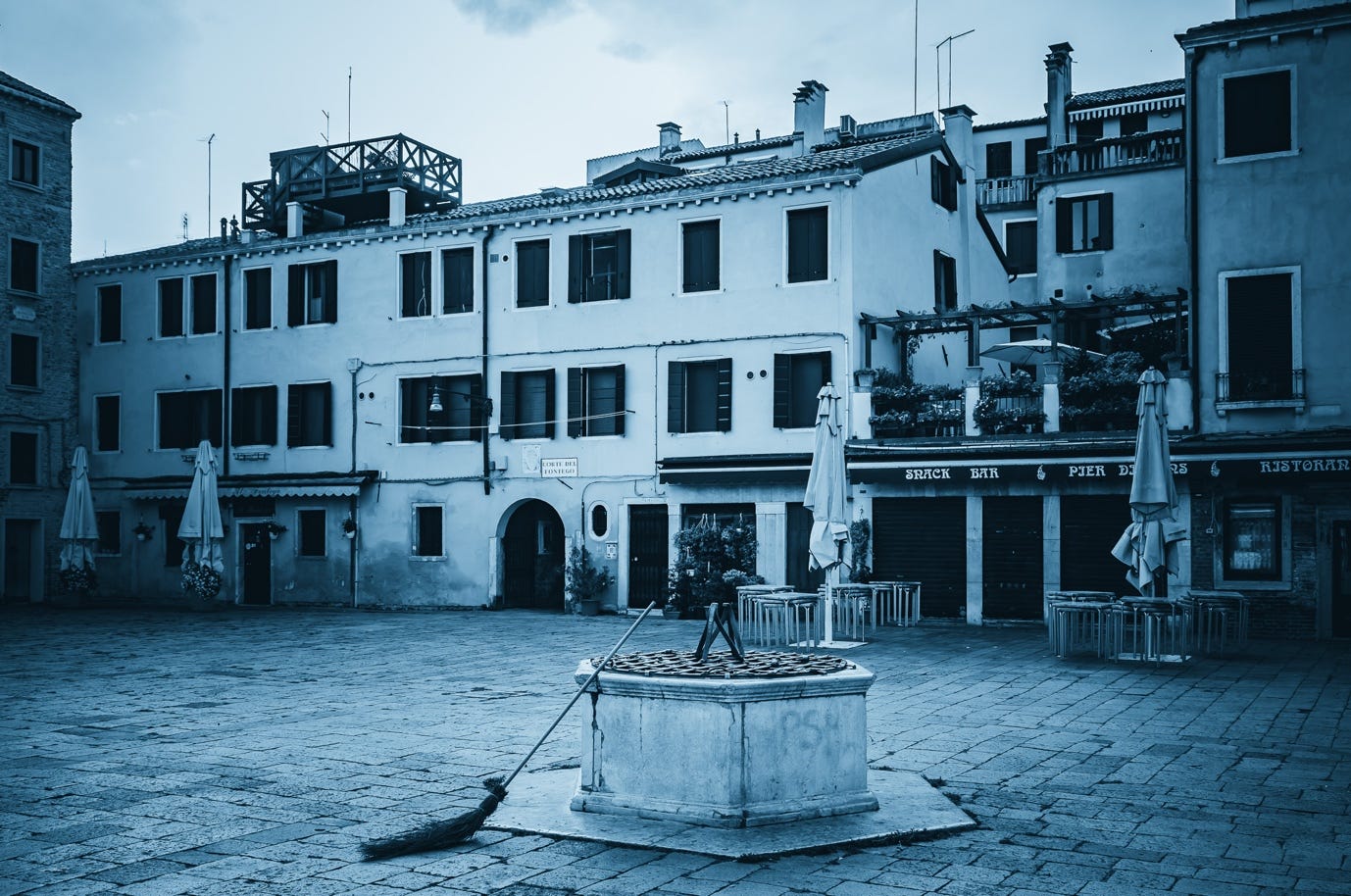
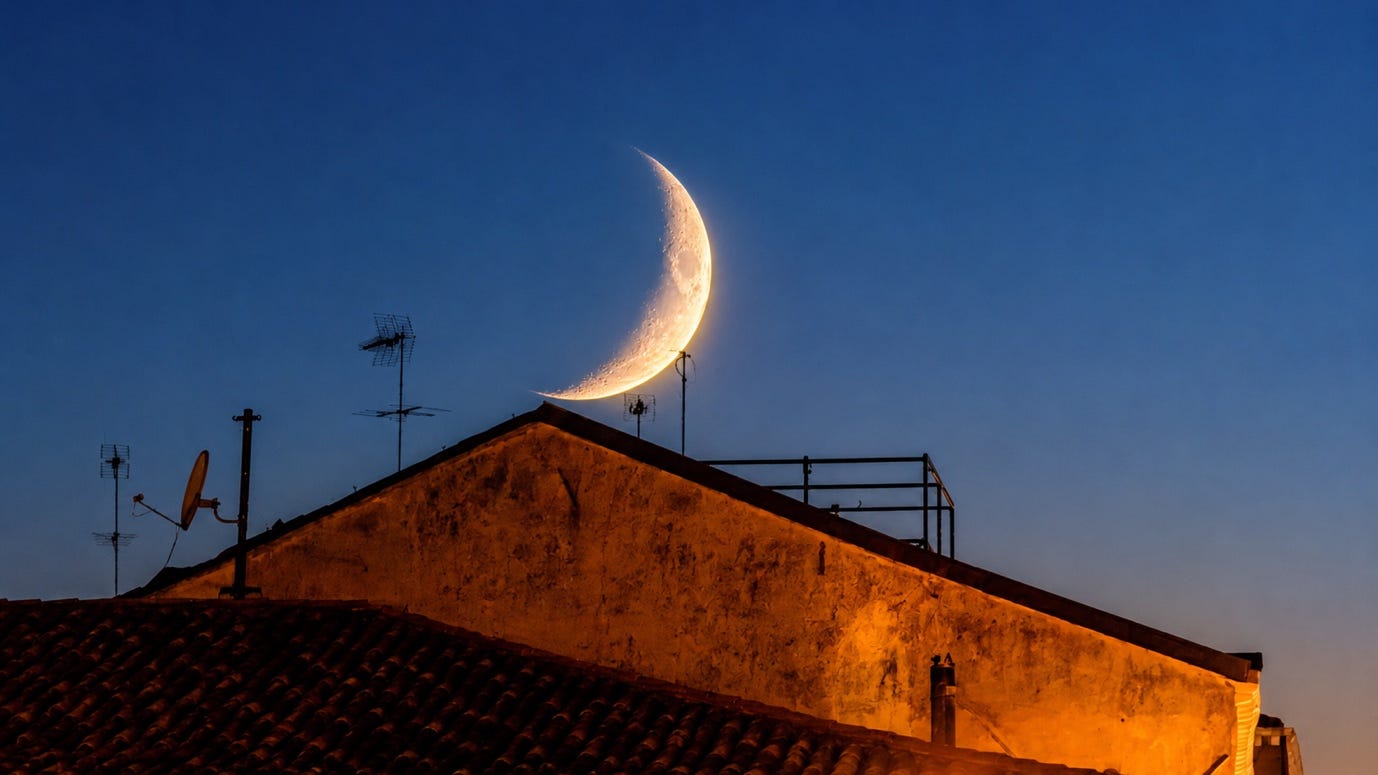
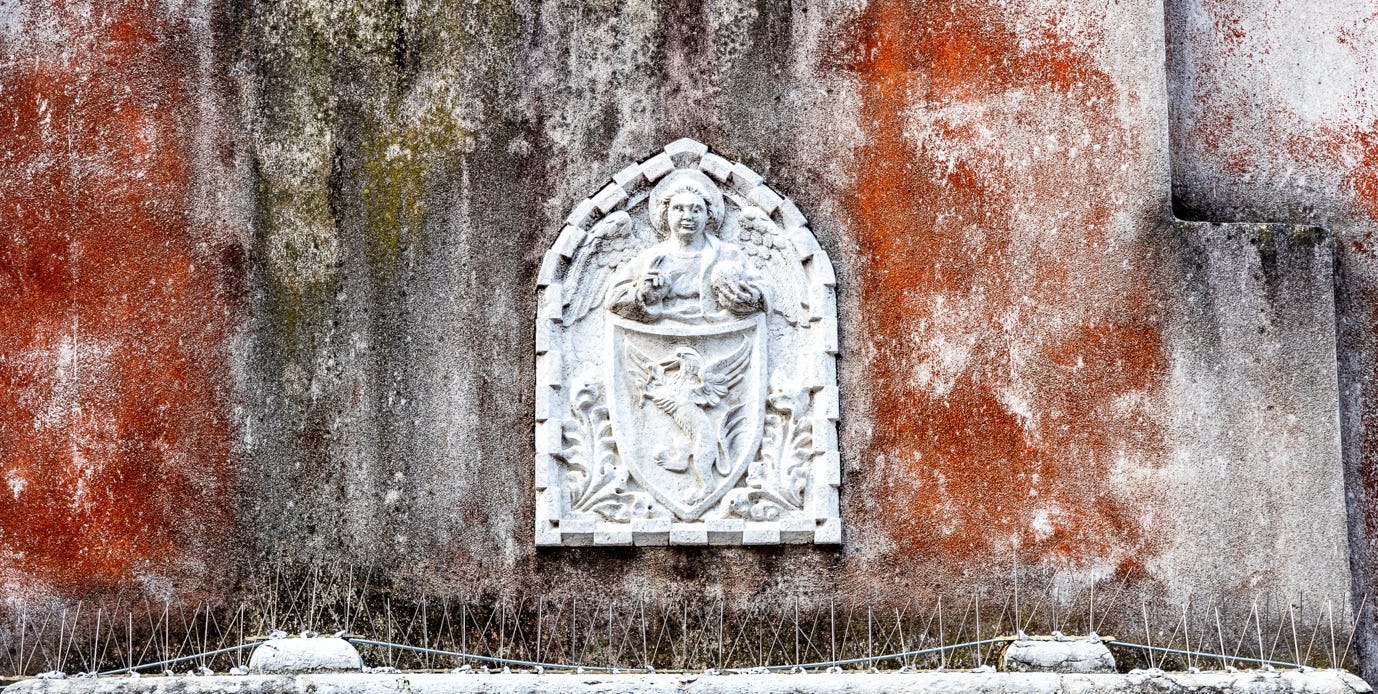
The very early morning journey resumes among quieter forms: overgrown walls, worn houses, street furniture covered with stickers, a broom leaning beside a wellhead. These modest details resist the monumental Venice of postcards. They reveal a city that must still be swept, repaired, crossed and inhabited. The final images return to the lagoon and to the crescent moon above a roof: two forms of distance, one horizontal and one celestial.
This is therefore not a comprehensive portrait of Venice. It is a record of what the city permitted me to see while I was ostensibly going somewhere else.