
Between Kingdoms: What Malmö Taught Me
Reflections on what it means to study displacement from a position of comfort, and why the contradictions we can't resolve might matter more than the solutions we can't achieve.


[The title is hidden behind the snowstorm]
The train from Copenhagen reached Malmö Central Station during what Scandinavians call reasonable winter weather. Which is to say: I could see approximately nothing, and the wind appeared committed to my personal annihilation. This was not picturesque snow: not the kind that features in tourism brochures or childhood memories. This was snow as argument, as refusal, as the city’s instruction: You will not understand me on your terms.
I had come to attend a workshop on political knowledge production, a phrase that manages to make thinking sound like industrial output. My suitcase contained the usual academic armor: conference papers, institutional credentials, and questions prepared in the quiet of my study back home. None of this proved remotely useful for the problem of walking four blocks through a blizzard.
The street signs had disappeared. The hotel I’d carefully located on Google Maps had apparently relocated to another dimension. Even the other—rare—pedestrians were merely darker densities in the general whiteness, shapes that condensed momentarily into human form before dissolving again. I walked in what I hoped was the correct direction, guided by faith rather than evidence, my expertise in post-Soviet political transitions providing exactly zero insight into forward motion through Scandinavian weather.
By the time I found the hotel—soaked, disoriented, newly humble—I had learned something the workshop could not teach me: Malmö does not present itself. It withholds itself, strategically, until you’re ready to encounter it as something other than an object of analysis. The city’s first lesson: before evaluation comes surrender.
I stood in the cozy warmth of the hotel lobby, melting snow pooling around my inadequate shoes, and thought about thresholds. Not in the abstract way I’d planned to discuss them in my panel presentation, but in the immediate sense of standing between outside and inside, between expectation and encounter, between the scholar who arrives with theories and the body that must first survive the weather.
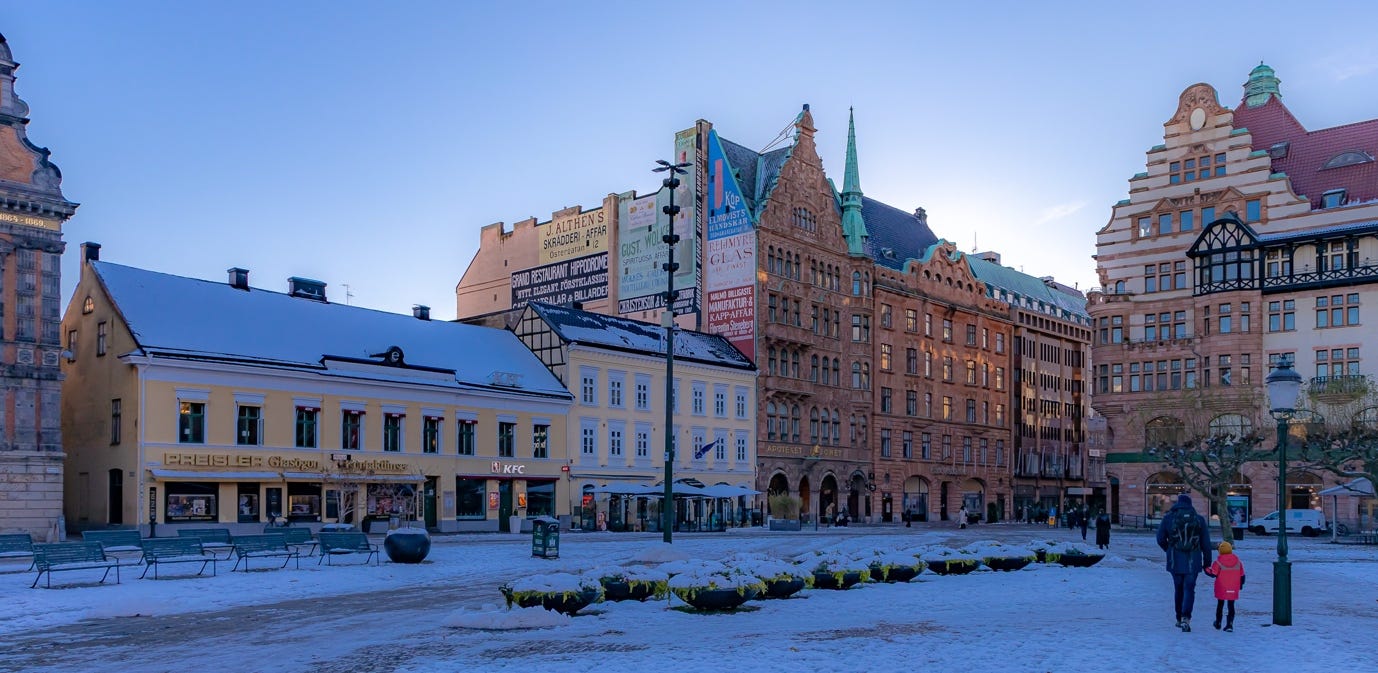
The next morning, the storm had passed. Malmö appeared in brutal sunlight, clean and implausible, slightly embarrassed about yesterday’s theatrical self-concealment. I walked to the workshop through streets that looked as if they’d been invented overnight. But what I began to see was not one city but a composition, where each layer was true, each layer erasing and revealing what came before.
The workshop met in one of those aggressively cheerful Scandinavian seminar rooms, all windows and blonde wood, designed to prevent despair through sheer chromatic optimism. But I kept returning to the storm, to the city’s initial refusal. Malmö, I decided, is fundamentally a crossing. Not a destination, not a settled place, but a threshold that has learned to inhabit its own in-betweenness.
This thought would complicate itself over the next days. Most thoughts do.
The Bridge
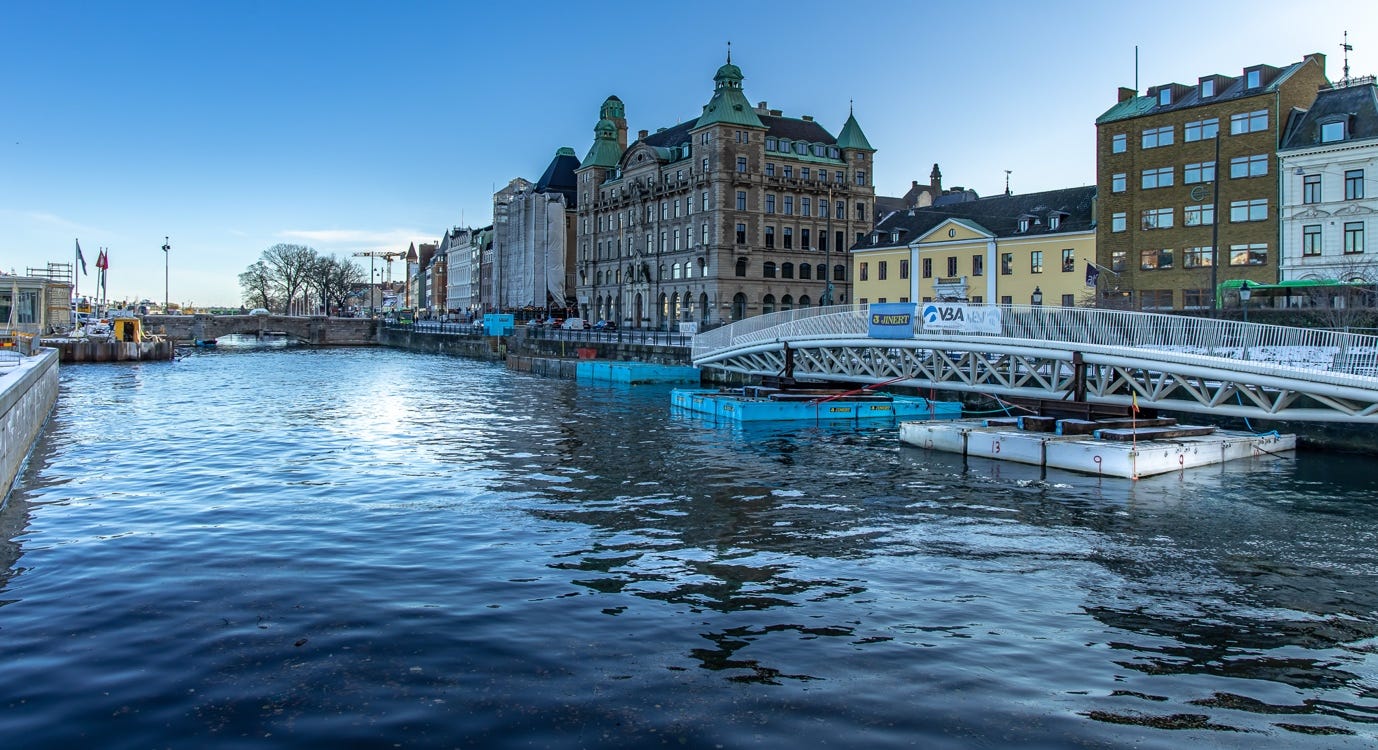
When I had free time, I walked toward Västra Hamnen, hoping to see the Öresund Bridge. Not to cross it—I’d already done that by train, in yesterday’s whiteout—but to look at it properly, to understand what eight kilometers of prestressed concrete were trying to say about borders.
The bridge is visible from Malmö’s western waterfront, a clean geometric line drawn across the sound toward Denmark. What struck me, standing there in the cold, was its utter lack of ambiguity. This is infrastructure with opinions: distance can be solved, borders can be bridged, the regional economy will be integrated. The engineering is confident in ways that human institutions rarely manage.
The bridge opened in 2000, the last year of the 20th century, promising to heal a historical wound in the 21st. For centuries, this was Danish territory, Malmhaug, the archbishop’s fortress-harbor. Then, in 1658, the Treaty of Roskilde administratively transferred the entire region to Sweden. Same stones, different flag. The buildings presumably found this bewildering. Scandinavian history is full of these paperwork adjustments, as if identity were a filing error that treaties could correct.
The Öresund Bridge was supposed to make the question of belonging obsolete. Create an integrated region, blur the boundary, let fifty thousand daily commuters erase three and a half centuries of separation through the simple fact of going to work. And in some sense, it succeeded. I watched them that day from the waterfront—professionals in dark coats moving between nations with the weary fluency of people who cross international boundaries the way others cross neighborhoods. As a cheerful barman explained, these are Swedes working in Copenhagen because the salaries are better; these are Danes living in Malmö because the rent is cheaper. The bridge enables this exchange the way a market enables trade: efficiently, neutrally, without sentiment.
But here’s what the engineering doesn’t advertise: the bridge simultaneously abolishes distance and intensifies what distance meant. Every convenience is also a permission, and every permission implies an authority that can revoke it. I learned this from a report on Swedish migration and border policy. The authors—smart, committed, genuinely concerned—discussed how the bridge became a checkpoint during the 2015 migration crisis. How infrastructure built for regional integration transformed overnight into an instrument of selection. One researcher used the phrase “selective permeability,” which struck me as the perfect euphemism. Borders that dissolve for capital and credentialed workers but solidify for bodies without approved papers.
I thought about my own crossing: an EU passport, academic affiliation, and an invitation letter from the research center. For me, the bridge is frictionless; I barely noticed the border. But for the Somali teenager without documents, the same structure is a wall. This is the bridge’s actual innovation: it has made crossing so easy for some people that others’ inability to cross becomes invisible to those of us who pass through freely.
Standing on the Västra Hamnen promenade, watching the bridge recede toward Denmark, I tried to remember what the political theorist had said about sovereignty. Something about how power works most efficiently when it doesn’t feel like power, when crossing a border feels like taking a train, when selection feels like infrastructure, when exclusion is simply the absence of a permission you didn’t know you needed to request.
Malmö is not divided by a border. Malmö is border. The entire city exists as a threshold between kingdoms, between languages, between sea and land, between those who cross freely and those who cannot cross at all. This is not a metaphor. Walk through Gamla Staden, the old town where Danish bricks serve Swedish sovereignty, where the fortress changed flags while the butcher probably continued selling meat to the same customers under new administrative oversight. The architecture remembers what the treaties want to forget: that belonging is more complicated than passports, that identity is more stubborn than paperwork, that cities accumulate history like sediment, and no bridge can engineer away three centuries of being between kingdoms.
What I couldn’t yet see—standing there that day, cold but pleased with my insight about thresholds and selective permeability, was that I was looking at the easy border. The one marked on maps, managed by treaties, and crossed by trains. The borders inside Malmö, the ones between neighborhoods, between Swedish and not-yet-Swedish, between the city that brands itself and the city that exists—those borders have no bridges. No infrastructure. No engineers confident enough to solve them with prestressed concrete.
But I would learn about those borders later. For now, I had a workshop to attend, an agenda to fulfill, and collegial conversations to navigate. I walked back toward the university, the bridge diminishing behind me, carrying its contradictions across the sound with the efficiency that only good engineering can achieve.
Every bridge is also a checkpoint. Every threshold asks: who gets to cross?
Shipyard Ghosts
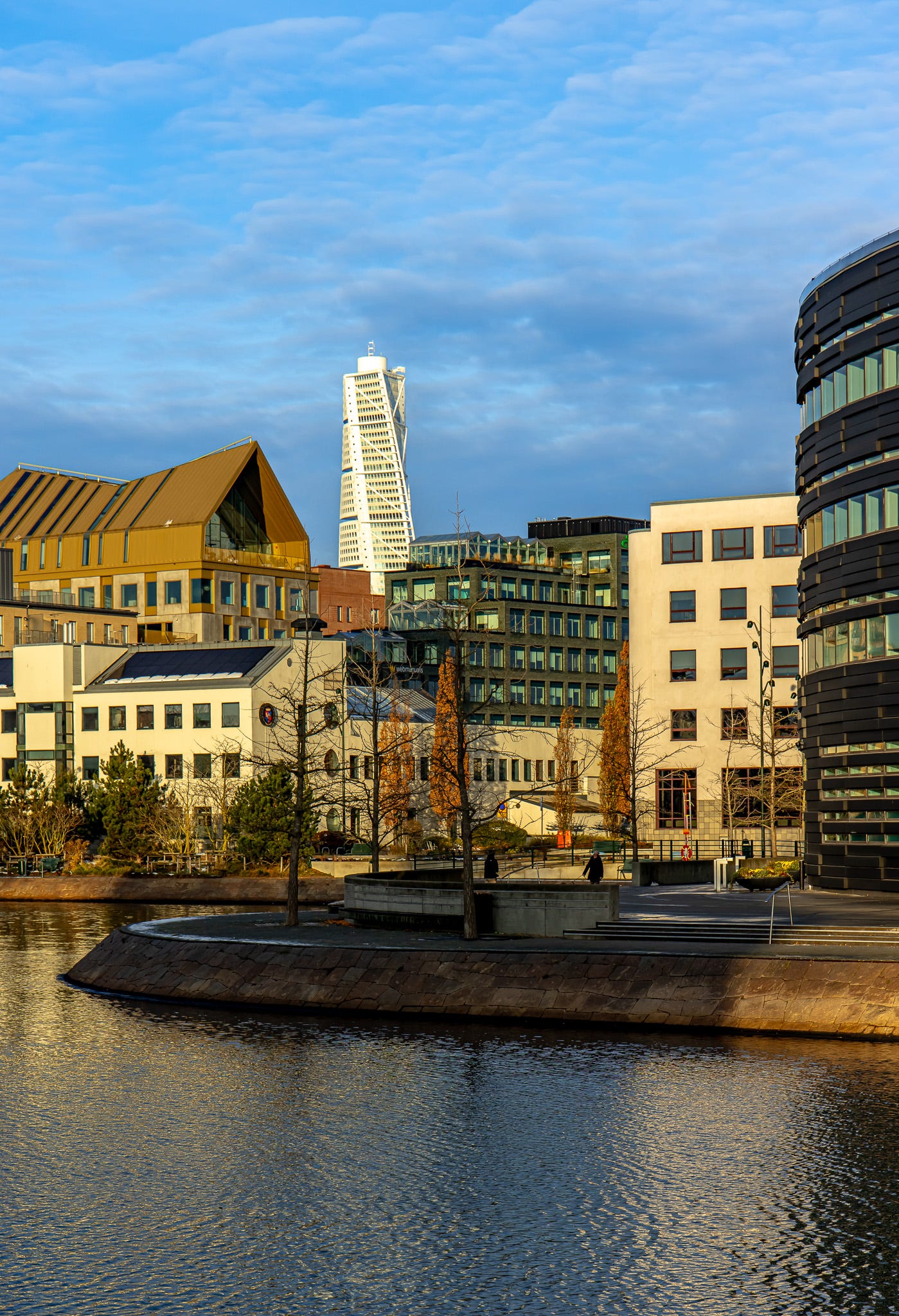
Western Harbor exists in the conditional tense. It would have been a shipyard, had been a shipyard, is now something that identifies itself primarily through negation. The Turning Torso rises from this former industrial site like an exclamation mark in glass and steel, Santiago Calatrava’s twisting human spine rotating ninety degrees from base to crown. The building is beautiful—genuinely so, in that expensive contemporary way—but what you notice first is its orientation. The tower turns its back on the old harbor, faces toward Copenhagen, toward the Öresund, toward anywhere, but the cranes and rust it replaced.
This is architecture as selective memory.
I walked through Western Harbor, between the workshop’s sessions on sustainable urbanism. The waterfront is immaculate: reclaimed industrial buildings now house design firms and tech startups, the promenade features carefully positioned benches, and the cafés serve coffee with words like “Nordic” and “artisanal” prominently displayed. Everything has been thought through. The urban planning is intelligent, the commitment to sustainability is real, and the sense of possibility is palpable. I found myself liking it, which complicated what I’d planned to say about post-industrial transformation.
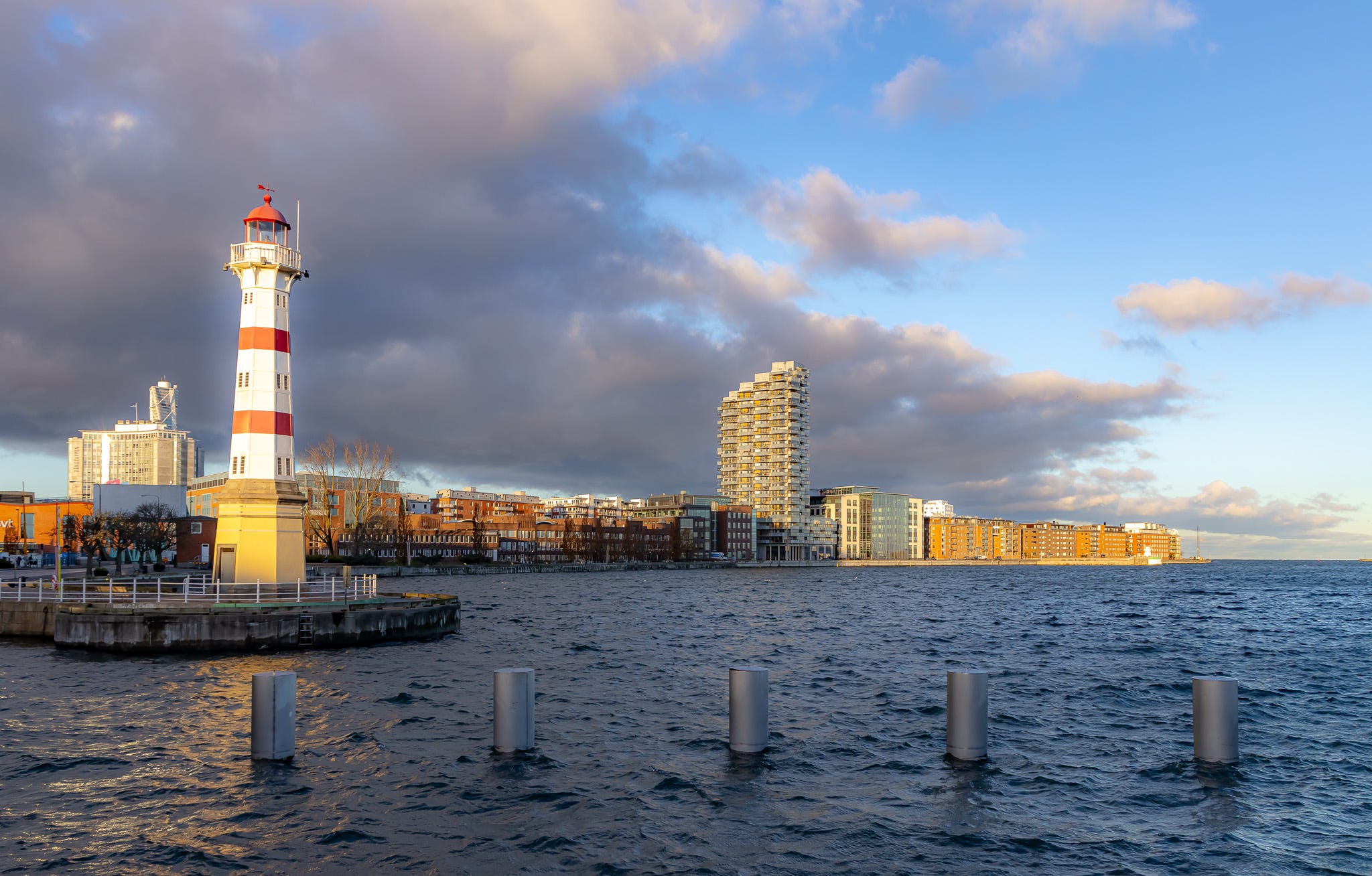
The complication has a history. The Kockums shipyard closed in the 1980s, taking thirty thousand jobs with it. Not just employment but identity: the coherent story Malmö had told itself about what it was for. If a shipyard city no longer builds ships, what remains? The answer Malmö chose was aesthetic: turn the waterfront into luxury housing, replace cranes with cafés, transform the site of labor into the site of consumption. The Bo01 district, with its green roofs and stormwater management, won international awards. Western Harbor became a model, a case study, proof that post-industrial cities could reinvent themselves successfully.
I sat in one of those cafés—exposed brick, reclaimed wood, unexpectedly excellent coffee (forgive my Milanese arrogance)—and thought about the word “reinvent.” It suggests continuity, as if the same city merely changed clothes. But the shipyard workers didn’t reinvent themselves as app developers. They dispersed. And in their place came people like the ones around me: young professionals who could afford Western Harbor’s rent, who worked in offices with harbor views, who made their living from activities that would have been incomprehensible to someone building ships in 1979.
What happened here was not a transformation but a substitution. One form of labor replaced by another form of labor, one mode of extraction replaced by another mode of extraction. The extraction continues: it just looks better now, smells better, has better coffee. Very different from my native, rusty, bombarded Zaporozhye.
A young researcher from the workshop joined me, someone I’d met that day during the coffee break. She was working on her dissertation on creative-city policies in Scandinavia and was genuinely enthusiastic about Western Harbor. The green infrastructure, the mixed-use development, the conscious effort to create sustainable urbanism—she walked me through the planning decisions with the kind of detailed knowledge that comes from months of archival work. Everything she said was accurate. Everything she said was also a beautiful evasion.
Not because she was lying—she wasn’t. But because the language itself performs a kind of political hygiene. “Creative economy,” “knowledge workers,” “sustainable redevelopment”—these terms clean away what actually happened. They make the substitution sound like progress, the displacement sound like opportunity, the fact that one class of workers vanished while another class appeared sound like natural evolution rather than deliberate policy.
I wanted to ask her: where did the shipyard workers go? But I already knew the answer from every post-industrial city I’ve lived in. They didn’t go to the margins of Western Harbor; they couldn’t afford to. They went to the margins of Malmö, to neighborhoods where transformation hasn’t arrived, where the welfare state’s promise looks increasingly theoretical. The Turning Torso rotates away from this question at ninety degrees per second.
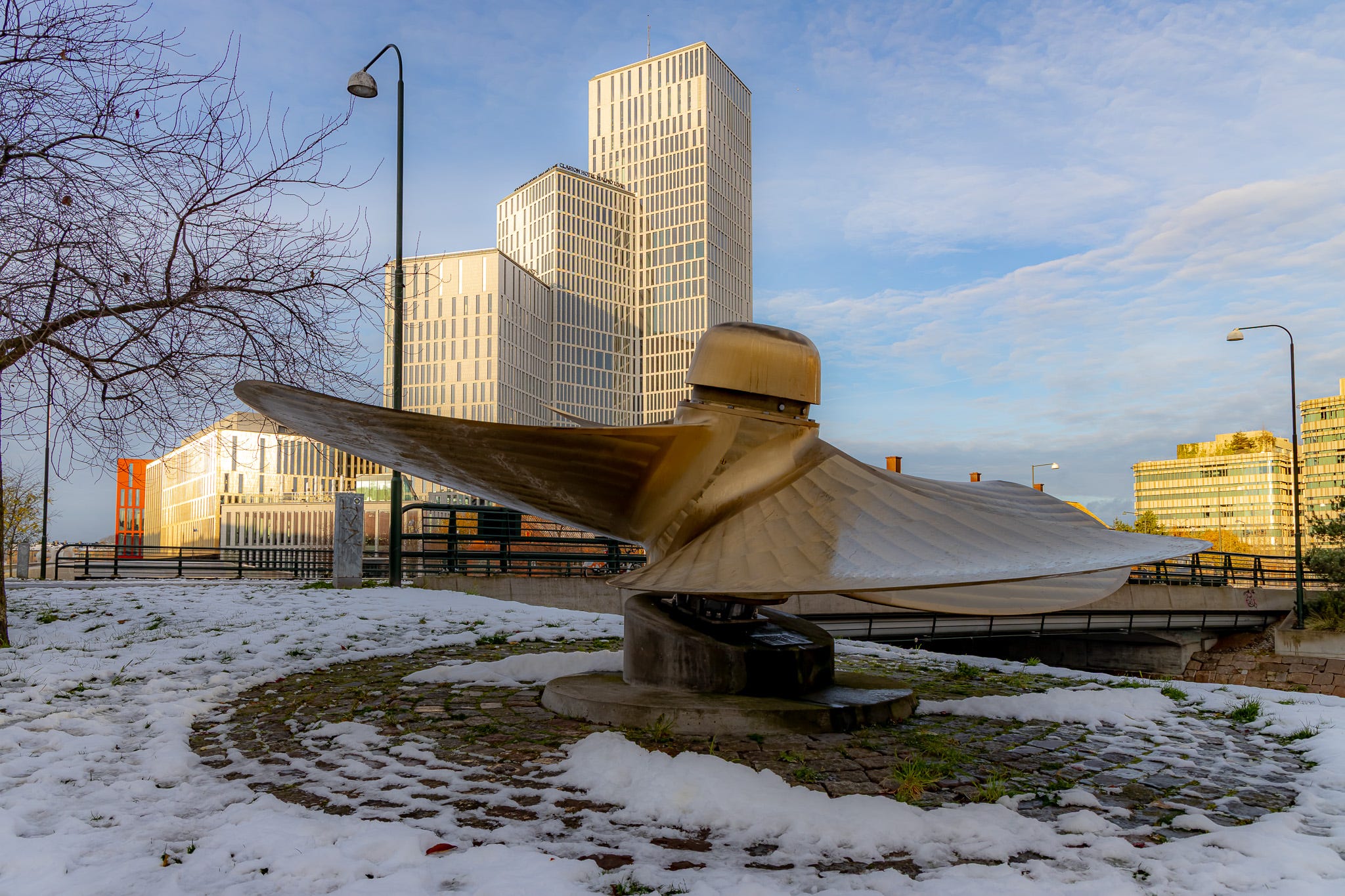
And yet—here’s my cynical confession that makes this more difficult—I liked Western Harbor. Not despite understanding its history, but while holding that understanding. The urban design is thoughtful, the sustainability measures are functional, and someone actually tried to build something better rather than merely more profitable. Walking past the Bo01 district, past the intelligent stormwater systems and the buildings designed to minimize energy use, I felt something rare in contemporary cities: evidence that humans can occasionally think beyond quarterly returns.
But liking something doesn’t require pretending it isn’t built on buried labor. The shipyard ghosts are present here—not as literal haunting but as structural absence, as the bodies that don’t appear in Western Harbor’s promotional materials, as the question the Turning Torso literally turns away from asking: whose body? Whose turn? Whose spine bears the cost of this beautiful transformation?
I paid for my artisanal coffee and walked back toward the university. The researcher continued talking about planning documents and sustainability metrics, and I nodded, having learned long ago that sometimes the most honest response is simply to acknowledge what’s been accomplished while refusing to celebrate what’s been erased.
The Turning Torso remained visible behind us, still rotating, still beautiful, still facing away from its own history.
Rehearsing the Flood
The bus to Augustenborg took me east, away from the polished waterfront toward working-class Malmö. I’d read about the neighborhood’s transformation into a stormwater-management showcase and wanted to see what it meant when a city redesigns itself around anticipated catastrophe.
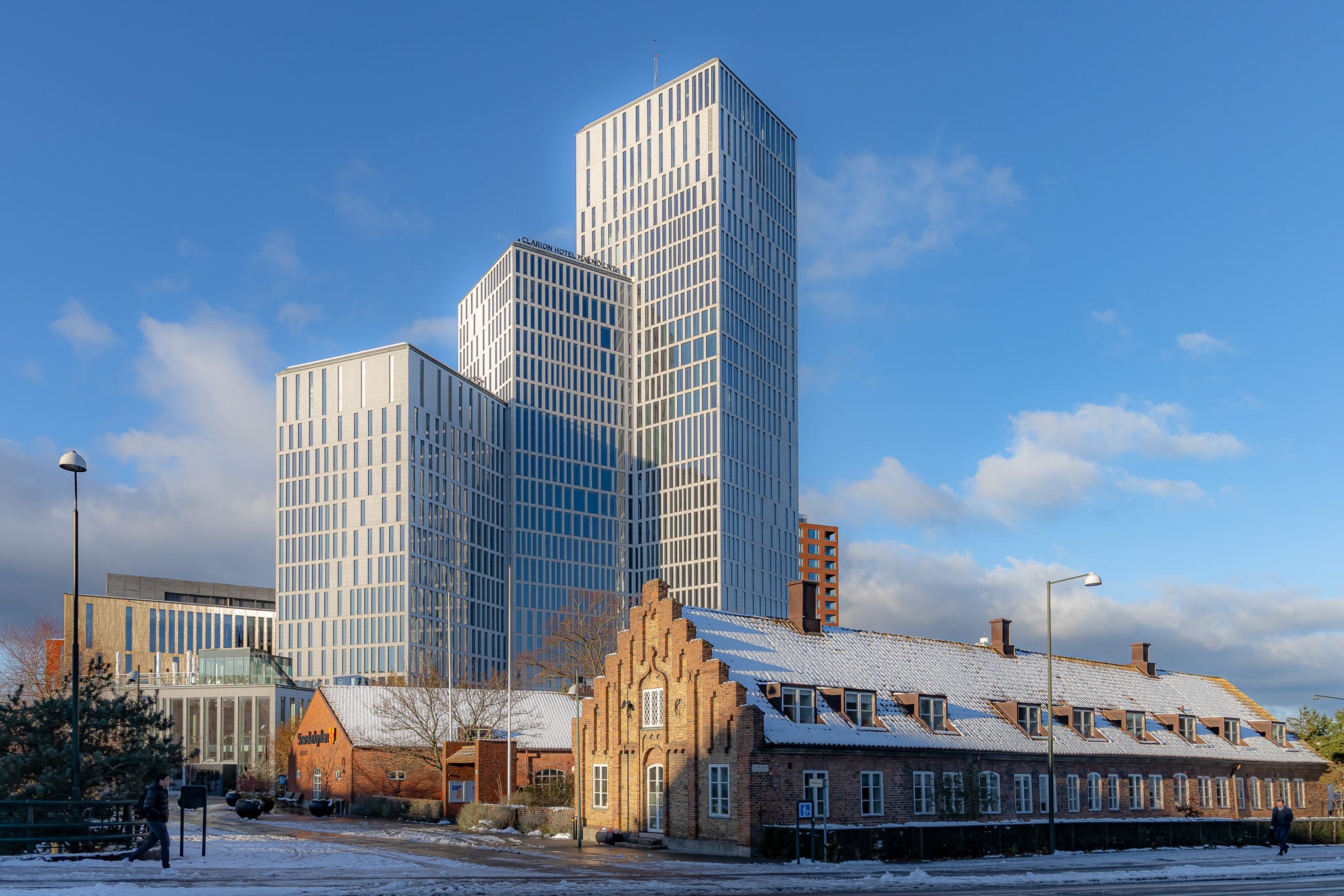
What I found was a landscape of preparation. Walk through Augustenborg, and every surface has been reinscribed with the expectation of future floods. Green roofs absorb rainfall, open stormwater canals channel excess water, retention ponds collect what the drains cannot handle, and bioswales filter runoff before it reaches the sea. The infrastructure is visible, deliberate, pedagogical—teaching residents that water is not something to hide in underground pipes but something to coexist with, manage, and make room for.
This is not the hubris of classical engineering, the modernist fantasy that sufficient technical mastery can control nature. This is something stranger: choreographed coexistence with catastrophe. The city’s district cannot prevent floods, but it can perhaps dance with them, redirect them, absorb them, make them visible and manageable rather than sudden and devastating. Every design element is a small prayer in concrete and vegetation: when the water comes—and it will unavoidably come—we will be ready.
I walked along one of the open stormwater canals—a concrete channel lined with plants, designed to make water’s movement visible rather than secret. Children were playing near it, utterly indifferent to the fact that they were playing beside infrastructure designed for catastrophe management. Which is, I suppose, the point. Normalize the preparation. Make resilience into an everyday landscape. Teach the next generation that living with water is simply what cities and citizens do.
The theology here is subtle but unmistakable. Augustenborg has redesigned itself around anticipation: not faith that catastrophe can be prevented, but preparation for its arrival. This is civic life reimagined as ritual practice, as collective rehearsal. The neighborhood performs its own survival daily, practicing for floods that haven’t yet arrived but will.
But whose catastrophe is being rehearsed?
Malmö positions itself as a climate-leadership city, a laboratory that other places can learn from. International delegations visit Augustenborg to study “best practices.” Municipal reports present the neighborhood’s transformation as a model and a lesson, showing the world how to adapt to climate disruption with equity and intelligence. And the engineering genuinely is intelligent, the green infrastructure genuinely works, the preparation genuinely is happening.
But I kept returning to a darker arithmetic. Malmö’s climate change came from elsewhere: Swedish steel and shipping, centuries of industrial extraction, accumulated emissions of northern prosperity. And the future floods that Augustenborg so carefully prepares for will devastate other places first. Not with retention ponds and bioswales, but with displacement and demise. Many places around the world will soon experience what Malmö rehearses.
Standing beside one of Augustenborg’s retention ponds, watching winter sunlight catch the surface, I thought about what to call this arrangement. The phrase that came to mind was anticipatory injustice—wealthy cities engineering their survival while continuing to participate in the systems that guarantee someone else’s drowning. The eco-district becomes a moral aesthetic, a way of feeling virtuous about preparation while avoiding questions about causation and complicity.
The gap between Augustenborg’s rehearsal and others’ reality is not technical. It’s not that Malmö has discovered something other cities don’t know. It’s that Malmö has resources other cities don’t have, resources accumulated through the same historical processes that produced the crisis in the first place. This is what adaptation looks like when you can afford it: beautiful, functional, genuinely admirable infrastructure that nonetheless exists within vast global asymmetries of who gets to survive elegantly and who must simply improvise survival from insufficient materials.
I thought about Zaporozhye, where systems collapse when they fail because there is no backup, no redundancy, no carefully designed stormwater management. And yet—that stubborn conjunction again—standing there watching how the retention pond functioned both ecologically and aesthetically, how children played near infrastructure designed for catastrophe, how the neighborhood had actually made something new from acknowledging vulnerability rather than denying it, I felt something like hope. Not naive hope, not the hope that technical solutions will absolve us from political reckoning. But a smaller, more modest hope: that some humans, somewhere, are trying to build landscapes of coexistence rather than domination.
Augustenborg doesn’t solve climate injustice. It doesn’t even address it. But it teaches that another relationship with water is possible, that cities can acknowledge vulnerability rather than pretending to transcend it, that preparation can become collective practice rather than individual panic.
Which is not nothing. Even if it’s not enough.
What I Did Not See
I did not visit Rosengård during my days in Malmö. This is not an oversight I’m confessing to but a structural fact about how academic knowledge production works. My itinerary between the workshop sessions included Western Harbor (success story), Augustenborg (best practice), the university campus (knowledge economy anchor)—but not Sweden’s most segregated neighborhood, fifteen minutes away by bus.
No one suggested that I go there. It would have been awkward to suggest it myself—I was busy with papers. So, I spent an evening reading instead. Municipal reports on integration challenges. Academic studies mapping unemployment (twice the city average), income levels (half that of central Malmö), and educational attainment (dramatically lower). The statistics perform a neat trick: they make inequality visible while keeping the people experiencing it invisible. Eighty-six percent of Rosengård residents have “foreign background.”
The reports are careful, well-intentioned, and genuinely concerned. They document “area-based stigma,” “spatial segregation,” and “parallel societies” as if these were unfortunate natural phenomena rather than outcomes of specific policy choices about housing, labor markets, and what happens when a welfare state encounters large-scale migration without fundamentally questioning who counts as part of the “we” that welfare is meant to serve.
But here’s what kept nagging at me, reading in my hotel room: Why didn’t I go?
The practical answer is simple: it wasn’t on my agenda. But the honest answer is more complicated. I didn’t go because visiting Rosengård would have required acknowledging that I was in Malmö to witness problems I don’t experience, using theories I developed at a distance, while staying in hotels in neighborhoods those theories don’t describe. Going to Rosengård wouldn’t have made me less complicit in this arrangement. It might have made me more uncomfortable with my complicity, which is not the same thing as being less complicit.
Academic circuits have their own geography. Workshops happen in universities, which are located in or near city centers, which means scholars stay in central hotels, eat in central restaurants, and may discuss peripheral problems from certainly non-peripheral locations. This isn’t a conspiracy; it’s logistics. But logistics are never neutral. The fact that it’s easier to study social segregation than to encounter it, easier to theorize exclusion than to witness it, means that the knowledge we produce is always already shaped by the position from which we produce it.
I’m trying to be honest about this without performing honesty as a virtue. The performance would be: “I should have gone to Rosengård, I regret not going, next time I will do better.” But that’s not quite right either. Going to Rosengård as a visiting scholar—walking through as observer, perhaps taking photographs, certainly taking mental notes for future papers—might be worse than not going. At least not going doesn’t pretend that a one-hour visit could overcome the structural distance between researcher and researched, between the mobility that academic credentials provide and the immobility that segregation enforces.
What I was circling around, reading those reports, was something I’ve been thinking about for years—a concept I call the “common dearth.” It’s meant as a counterpoint to all the comfortable talk about the “common good,” shared prosperity, and universal welfare. The Nordic model—which we do respect in post-Soviet countries—promises the common good: that abundance will be genuinely common, that everyone will share in collective wealth. But what is actually distributed is often scarcity, not abundance. Common dearth: more visible in the East of Europe, but also present in the better parts up North.
Rosengård and Western Harbor both belong to Malmö. Same city, same municipality, same formal citizenship, same welfare state. But they share very different things. Western Harbor shares in the city’s transformation, its investment, its future orientation. Rosengård shares in the city’s anxieties, its austerity, its past mistakes. Both neighborhoods participate in something common, but what’s common is the logic of distribution, not the things distributed.
This isn’t unique to Malmö, obviously. Common dearth operates everywhere, masking substantive inequality much better than the common good. But there’s something particularly sharp about encountering it in Scandinavia, in Sweden, where the promise of universal welfare is so central to national identity. The gap between promise and reality is wider here precisely because the promise was so ambitious. Sweden said: we will include everyone. When that turned out to be the case, the failure felt deeper.
The workshop sessions on integration were sophisticated, genuinely engaged with these tensions. But sophistication is a luxury. You can only theorize betrayal from a position of not being betrayed. The scholars presenting research on segregation, myself included, were people for whom the welfare state had mostly kept its promises. University positions, research funding, mobility across borders, and social capital that translates into institutional access. We discuss common dearth from positions of uncommon plenty.
On my last evening, I almost took the bus to Rosengård. I thought about it seriously. But then I thought: what would I actually do there? Walk around? Look at people? Take notes? Write an essay that begins “In Rosengård, I saw...”? The seeing would be the problem, not the solution. The problem is the distance that makes seeing necessary, the segregation that creates neighborhoods that become objects of knowledge rather than places where knowledge gets produced.
So instead, I’m writing this: an account of what I didn’t dare to see, what the structure of academic knowledge production makes it easy not to see. This isn’t better than going. But it might be more honest to go and pretend the visit bridged anything.
Malmö exists as two cities in the same geographic space. One Malmö appears in official branding: sustainable, innovative, successfully transformed. Another Malmö appears in integration statistics and police reports: segregated, stigmatized, evidence that transformation has costs someone is paying. These aren’t two different places. They’re the same city seen from different positions.
The question isn’t why Malmö is segregated. Segregation is how cities work under late welfare capitalism: sorting people by income, legal status, presumed belonging, and distance from power. The question is whether contemporary cities can face this honestly without immediately pivoting to solutions, best practices, or policy recommendations. Whether we can sit with the discomfort of common dearth before rushing to restore the fantasy of common good.
I don’t know the answer. I just know I didn’t go to Rosengård, and that fact means something about who gets to be mobile, who gets to study, who gets to write essays about cities they didn’t fully see.
Thinking from the Margins
The workshop took place at Malmö University, which is young enough that it still seems surprised by its own existence. Founded in 1998, granted full university status only in 2018, it lacks the medieval towers and Nobel ghosts that give older institutions, like nearby Lund, their gravitational authority. What it has instead is urgency—the urgency of a city that needed intellectual infrastructure after its industrial collapse, the urgency of addressing migration, climate, and inequality because these aren’t abstract research questions but problems visible from the seminar room windows.
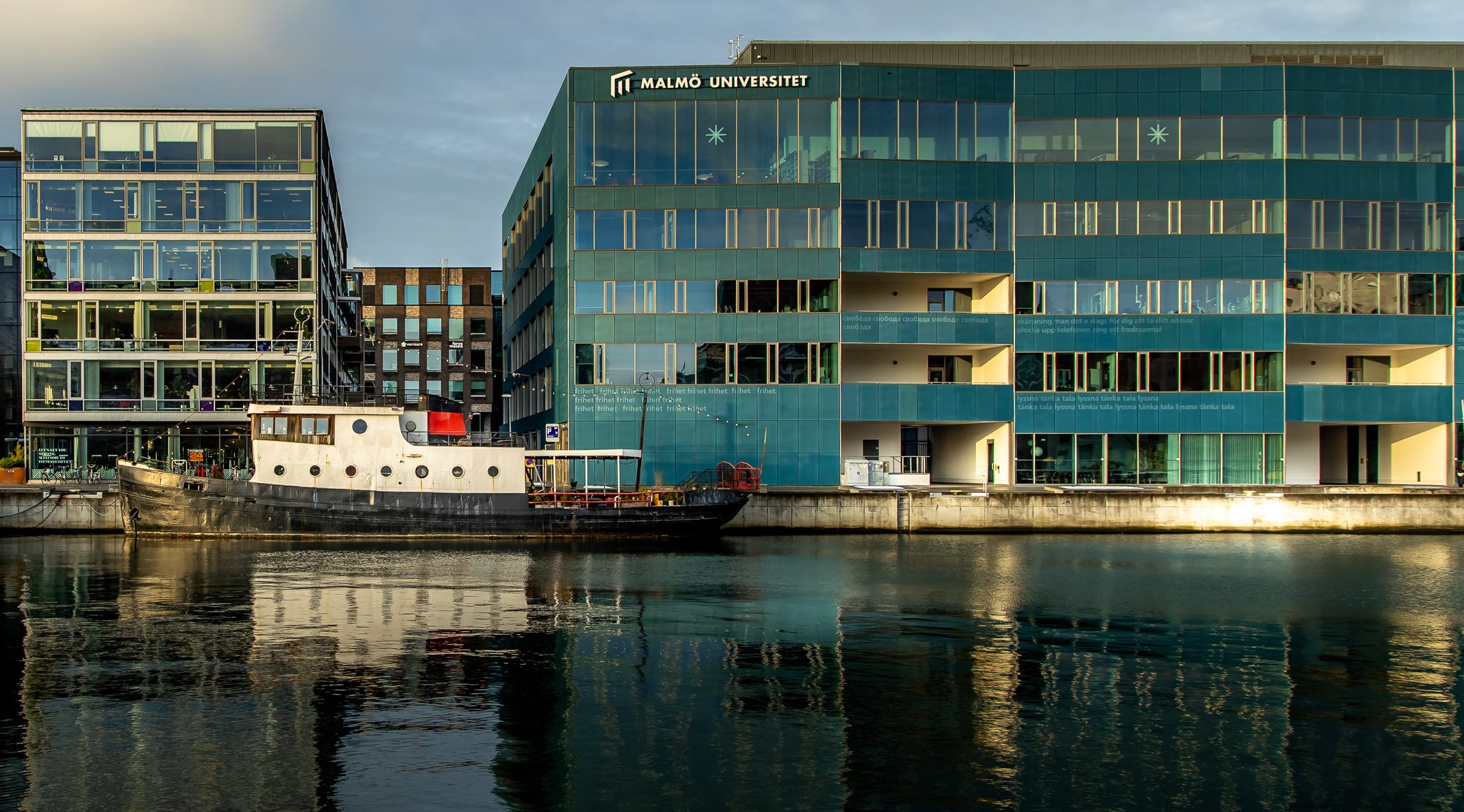
In the university cafe after the workshop, I talked to a professor researching urban belonging and youth identity in marginalized neighborhoods. She was Swedish, with that particular fluency in English that comes from having worked across multiple countries and languages. Her research drew on interviews with young people in Malmö’s segregated districts: detailed, ethnographically careful, attentive to what her subjects actually said rather than what theory predicted they would say.
What struck me wasn’t the research itself, but her refusal of scholarly distance. She was clearly angry about the segregation her research documented, clearly invested in the possibility that knowledge might contribute to justice rather than just to academic careers. This isn’t common in universities, where we’ve been trained to treat anger (and other emotions) as unprofessional, investment as bias, and care as methodologically suspect. She kept saying: “We can’t keep studying displacement without being displaced ourselves. Not physically, necessarily. But epistemologically. We have to let the contradictions move us from where we’re comfortable.”
She was right. But I also wondered: from what position was she able to say this? As someone researching refugee bureaucracy, was she herself displaced? Or was she, like me, an eternal cognitary migrant, mobile in ways that make displacement elective rather than forced? There’s a difference between choosing to be epistemologically unsettled and having your epistemic ground pulled out from under you by revolutions, by policy, by borders, by wars, by the accidents of where you were born.
These questions connect to something I’ve been working on for years: what I call paleoliberalism. The paleo- prefix is deliberate: it signals both oldness, resilience, and stubbornness, the way paleontology deals with ancient bones that refuse to disappear. Paleoliberalism is my term for the commitment to sustaining liberalism through its contradictions rather than abandoning it when those contradictions become uncomfortable.
Liberal philosophy promised universal dignity, universal rights, universal mobility—that anyone, regardless of birth or background, could participate in political and social life. But universality keeps hitting its limits: in border controls that sort bodies by passport color, in welfare states that include some and exclude others, in knowledge institutions that study inequality while reproducing it. The easy response is to declare liberalism dead, exhausted, superseded. The paleoliberal response is harder: to insist that liberalism’s failure to achieve its promises doesn’t invalidate the promises, and that facing the gap between promise and practice is more honest than cynicism.
Malmö is a liberal infrastructure made concrete. The Öresund Bridge promising free movement. The university committing to knowledge access and social mobility. The eco-districts engineering resilient futures. But all of it built on illiberal exclusions: migration controls, racialized policing, segregated housing, and climate adaptation that protects some while others drown. The question isn’t whether to resolve this contradiction through better policy. The question is whether facing the contradiction honestly might be a form of thought that matters more than solutions.
This is where young universities like Malmö’s become interesting. They can’t rely on prestige, so they rely on relevance. Their faculties are organized around societal challenges—technology and society, culture and society, education and society—rather than traditional disciplines. Their research priorities read like urgent problems: migration, sustainability, urban inequality, geopolitical risks. You could call this pragmatic or theoretically shallow, depending on your commitments. But there’s something valuable about institutions that have to think from problems first, traditions second.
I’ve spent my career between institutions: at Soviet universities when the Soviet Union still existed, at Ukrainian institutions as they began their path, at Western research centers after my migration started, and now at a German university that still isn’t quite sure what to make of a post-Soviet philosopher. This gives me a sideways view of how knowledge gets produced. The ancient centers—Bologna, Oxford, Harvard, even Moscow State in its prime—excel at refinement within established frameworks. They’re very good at subtle argumentation, footnoting, credentialing, and maintaining standards. But the margins produce something different: urgency, friction, the kind of thinking that emerges when you can’t take your categories for granted.
Malmö University seems to think from the margins: geographically peripheral, institutionally young, oriented toward contemporary crises rather than canonical texts. It “produces” educated workers for the knowledge economy it studies critically. It “collaborates” with city branding that erases the segregation its researchers document. It extracts intellectual labor from precarious doctoral students while researching precarity. Being aware of these contradictions doesn’t resolve them. It just means the contradictions are articulate.
But perhaps that’s enough. Not to solve contradictions—solutions have their own violence, their own exclusions—but to hold them in view, to refuse the comfort of either celebration or cynicism. After the workshop ended, I walked across campus, watching students move between buildings in the fading afternoon light. Young people, mostly, from everywhere—Swedish and not-yet-Swedish, European and extra-European, carrying hopes that some of them would realize and others wouldn’t.
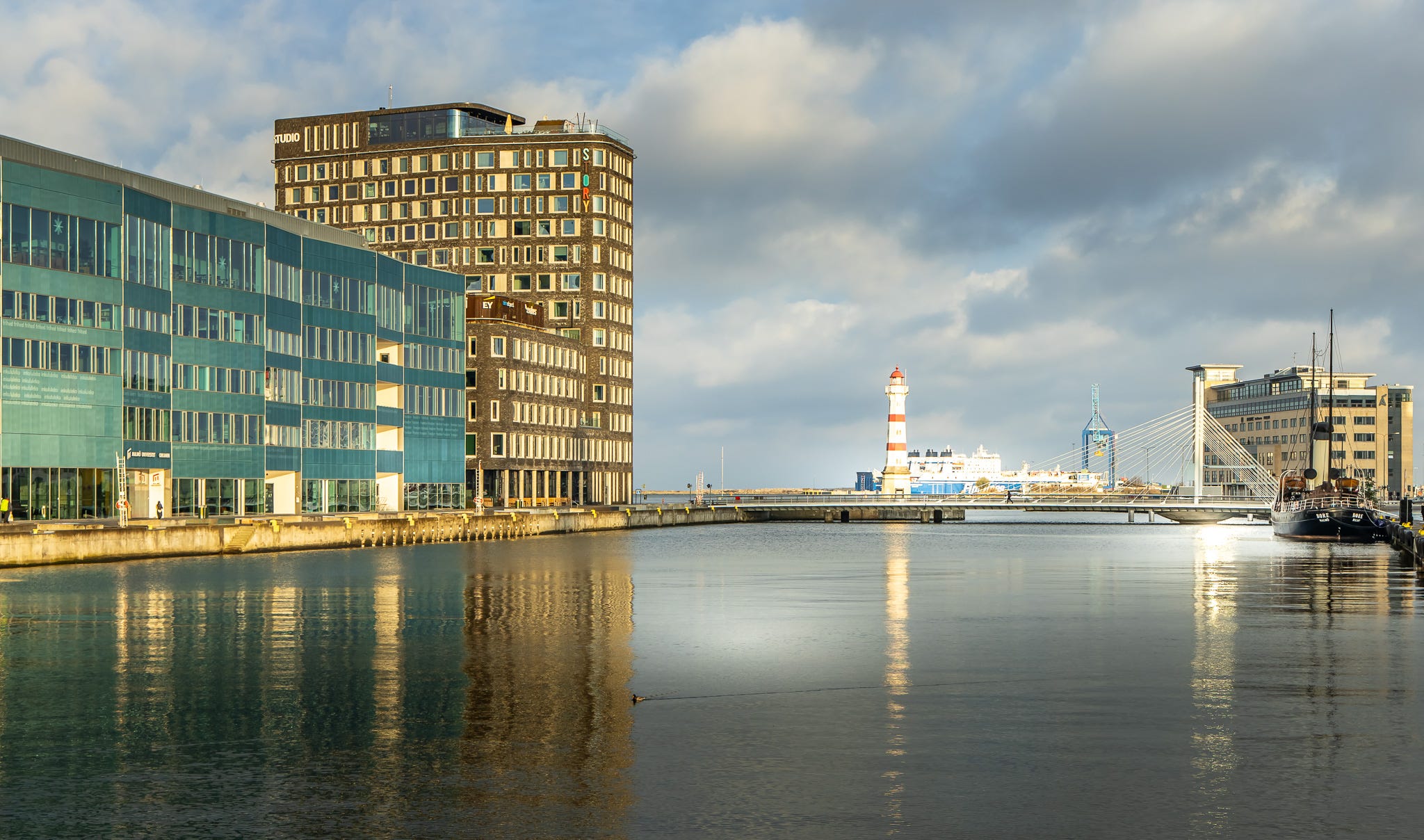
A young university on a vulnerable shore, making a wager: that thinking can emerge from problems rather than only applying itself to problems after the fact, that institutions at the edges might generate insights unavailable to more established, more prestigious centers. I don’t know if that wager will pay off. But I appreciated the stubbornness it took to make it.
As I left campus, heading back toward the hotel and eventually toward my departure, I thought: this is what paleoliberal philosophy looks like in practice. Not answers but questions held seriously. Not solutions but a refusal to accept the unacceptable as inevitable. Not purity but engagement with contradiction.
Which is, perhaps, all you can ask from thinking: that it remains awake to suffering, alert to complicity, skeptical of smooth narratives, and stubborn about the possibility that things could be otherwise.
Even here. Even at the margins. Even when the margins are where thought might matter most.
Departures
The train back to Copenhagen left at a comfortable ten o’clock in the morning. While in the train underground tunnel, I imagined Malmö recede through the window: the Turning Torso still performing its slow rotation against the winter sky, Western Harbor’s glass facades catching the late sun, the harbor where ships used to be built now hosting apartments for people who work with information instead of steel.
These past days were not long enough to understand a city. But it’s long enough to learn again what you don’t understand, which is its own form of knowledge. What I didn’t understand about Malmö was finally clear: how a place holds incompatible truths simultaneously without collapsing under the weight of its own contradictions. Progressive eco-districts and segregated neighborhoods. Climate leadership is built on historical emissions. Bridges that liberate some and contain others. A young university scholar studying inequality while participating in its reproduction. None of this resolves. The city just continues, the way cities do, through the exhausting daily work of coexistence.
As the train began crossing the Öresund Bridge, I thought about thresholds again, but differently now. The storm that greeted me had been literal: wind and whiteness, the city refusing to appear. But Malmö’s real threshold was subtler. It was the gap between what institutions promise and what they deliver. Between universal welfare and selective inclusion. Between being a crossing and being a checkpoint.
Every European city is managing some version of this gap. But most hide it better than Malmö does. The older cities have centuries of accumulated prestige to soften the contradictions, established institutions to make exclusion look like tradition rather than choice. Malmö, a border city growing into a new Swedish metropolis, still figuring out what it wants to be, can’t hide it as effectively. Its segregation is visible, its climate rehearsals obviously unequal, its knowledge economy transparently built on the displacement of an earlier economy. This makes it either more honest or, at worst, simply less sophisticated, depending on how generous you want to be.
I chose, sitting on that train between nations, to be generous. Not because generosity resolves anything, but because cynicism is too easy. Declaring that progressive cities are hypocritical, that welfare states were never genuinely universal, that bridges are really walls—all true, all insufficient. The harder work is acknowledging the critique’s truth while refusing to abandon the project entirely. This is what I mean by paleoliberalism: not nostalgia for liberalism’s imagined past, but stubbornness about its unrealized ideas in the future.
The bridge took eight minutes to cross. During those minutes, I passed from one country to another without showing a passport, without stopping, without friction—because I’m the kind of person infrastructure was designed for. The fact that I can cross easily doesn’t make the bridge universal. It makes my ease particular, contingent, revocable. Someone else’s immobility is the condition of my mobility. This is not a metaphor; this is how thresholds actually work.
Through the window, the Öresund was grey and cold, the water that connects Malmö to Copenhagen and both cities to the wider Baltic, to networks of trade and migration and history that predate and will outlast any bridge. The water doesn’t care about national borders, regional integration, or selective permeability. It just continues, the way cities continue, the way life continues despite and through the institutions we build to organize it.
The nomadic philosopher’s condition: always arriving, always departing, accumulating cities like other people accumulate address changes. But what stays with me from Malmö isn’t the three days I spent there. It’s the hour I didn’t spend in Rosengård. The walk to the bridge, I couldn’t take. The green roof protecting against floods that will devastate other cities first. The shipyard workers, whose displacement made Western Harbor’s splendor possible. Everything I saw by noticing what wasn’t there.
Before I left, the Palestinian doctoral student, my good colleague, had sent me an article she’d written about what she called “studied ignorance”—the way knowledge institutions produce expertise in problems while remaining structurally unable to solve them. I read it on the plane, looking up occasionally to watch Berlin approach. She was arguing that universities don’t just study cities; they participate in making them—deciding which neighborhoods deserve research attention, which problems count as urgent, which solutions fit within fundable frameworks. Knowledge production is city-making by other means.
She is right. Which also means I’m complicit not just as a visitor, but as a producer: someone who turns three days of talking, thinking, walking, and reading into an essay, someone who converts Malmö’s failures and aspirations into professional currency. This travelgoue you’re reading is the proof. I get to transform the city’s contradictions into my own intellectual capital and profit from pointing out how others profit from inequality.
There’s no position outside this. No pure place from which to critique without participating. Even writing this acknowledgment of complicity is a kind of performance. Self-awareness doesn’t solve anything, it just makes the complicity articulate.
The plane landed at the Berlin Airport. I gathered my things and left the airport. Around me, the evening commute was beginning: people heading home, heading out, crossing the city with the practiced efficiency of those who know where they belong.
I had one more crossing ahead: tomorrow’s another trip, the next city, the next threshold. But for now, I stood still for a moment, letting the crowd flow around me, thinking about a city I’d left behind. A city built on passages and borders and the stubborn fact that people live there, raise children there, argue about school policies and traffic patterns despite contradictions that theory can’t resolve.
Malmö doesn’t offer solutions, but it offers something harder: the challenge of continuing when continuation means facing what you’d rather not see, acknowledging what you’d prefer to ignore, and sustaining liberalism in the face of its failures. Not because resolution is coming—it isn’t—but because the alternative to flawed continuation is abandonment. And abandonment, unlike flawed continuation, leaves bodies behind.
The Turning Torso is still twisting against the Swedish winter sky. The bridge is still carrying its daily fifty thousand crossings. The scholars are still researching, the city planners still planning, the neighborhoods still segregated, the climate still changing, the refugees still arriving, the borders still sorting. And it’s probably still snowing in Malmö.
The city disappearing into whiteness, refusing to be seen clearly, insisting—as it did on my first day—that before understanding comes encounter, before evaluation comes weather, before theory comes the stubborn fact of having to find your way through a storm.
That much, at least, I learned.